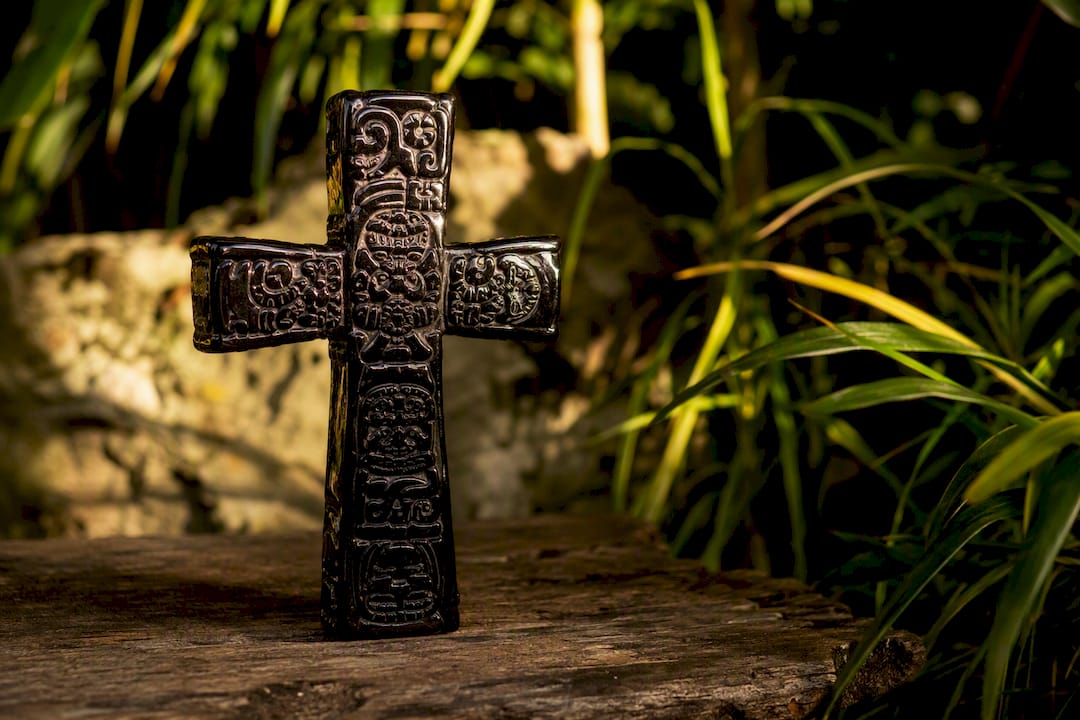
The Mayan Cross is a cosmogram, a symbolic map that binds sky, earth, and underworld along a vertical axis while marking four directions around a living center. It is not one artifact but a pattern that repeats across Maya art, architecture, and belief. Three references anchor everything that follows:
- The Palenque cross, carved in stone at the Temple of the Cross group
- The Tzolk’in, the 260-day sacred calendar that generates a personal birth cross
- The ceiba (ya’axche), the towering tree that Maya communities still treat as the living form of this same cosmic axis
Read as a whole, the Cross works two jobs at once. It organizes the entire cosmos for a community, and it maps a single person’s character and life stages onto that same structure.
Key Takeaways
The Mayan Cross functions as a cosmogram linking sky, earth, and underworld while also generating a personal birth chart through the 260-day Tzolk’in calendar.
| Point | Details |
|---|---|
| Dual function | The Cross maps both communal cosmology and an individual’s birth chart from the same 260-day system. |
| Archaeological grounding | The Palenque jade cache reshaped scholarly readings of the cross as a crafted ceremonial tree, not just an abstract carving. |
| Calendar mechanics | The Tzolk’in’s 13 numbers times 20 day signs produce 260 unique days, each generating a five-position birth cross. |
| Living tradition | Communities still dress and feed crosses during Holy Week, tying ritual timing to planting and harvest cycles. |
| Respectful engagement | Scholarly study and ritual authority are different things; lean on ethnography and community sources over decorative summaries. |
| Mymayansign’s role | Mymayansign’s calculator converts birthdates into Tzolk’in day signs and offers personalized reports built on that same calendar structure. |
Table of Contents
- Mayan Cross Meaning: Origins and Archaeological Evidence
- How the Cross Encodes the World Tree and Four Directions
- What Is a Mayan Birth Cross and How Is It Calculated?
- How Living Maya Communities Use Crosses in Ceremony
- How to Study the Mayan Cross Respectfully
- How Mymayansign Frames the Mayan Cross in Personal Readings
- Get Your Own Mayan Birth Cross Reading
- Frequently Asked Questions
- Sources
Mayan Cross Meaning: Origins and Archaeological Evidence
The clearest physical evidence for the Cross comes from Palenque, in the Temple of the Cross group built during the Classic period. For decades, scholars read the carved panel there as a stylized tree flanked by figures making offerings. A later reassessment changed that picture. Archaeologists reconstructed a cache of jade and shell fragments into what researchers now describe as a crafted jade tree adorned with bird and double-headed serpent motifs, evidence that the cross image may represent a deliberately built ceremonial object rather than a purely abstract symbol.
The debate has not fully settled, and that is worth sitting with. Some scholars argue the cross form traces the Milky Way’s path across the night sky. Others connect it to the maize plant, since young corn stalks branch in a similar cross pattern. Most researchers now treat these readings as layered rather than competing: tree, star path, and crop all fold into a single cosmogram that marks the primary directions and the sources of life.
Why does this matter to you as a reader today? Because every modern interpretation of the Cross, personal or communal, rests on physical evidence dug out of temple floors, not on guesswork.
How the Cross Encodes the World Tree and Four Directions
Picture the Cross as a compass laid flat, then pierced through its center by a pole running from sky to underworld. That vertical line carries most of the symbolic weight.
- The upper realm holds the celestial world: sun, moon, ancestral spirits, and destiny
- The center point is the human world, where daily life and community happen
- The lower realm is the underworld (often called Xibalba), tied to renewal, ancestors, and the dead
The four horizontal arms extend outward as cardinal directions, and Maya communities have long associated each one with different social and cosmic roles, from ancestry and lineage to community duty and personal destiny.
Layered onto this frame sit three recurring motifs. The ceiba stands in for the whole vertical axis, its roots reaching the underworld and its canopy touching the sky. Maize appears because corn is both food and metaphor for Maya identity itself. Bird and serpent figures, drawn straight from the Palenque jade reconstruction, sit at the top and base of the tree, marking the boundary points between worlds.
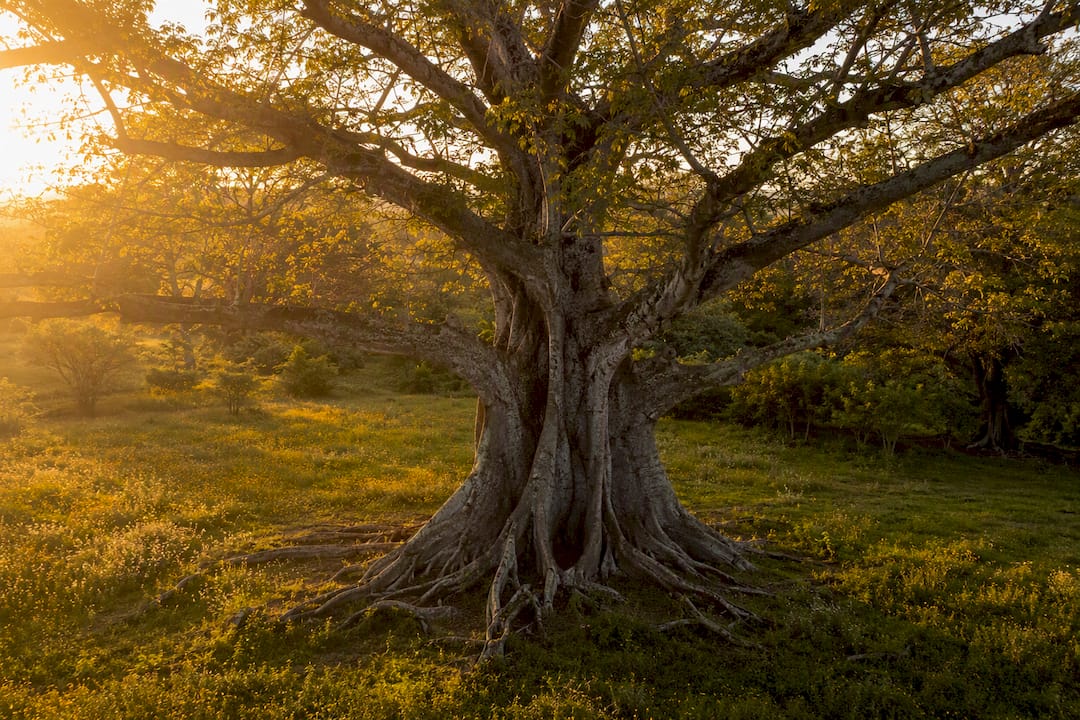
Pro Tip: If you want the fastest way to see this pattern outside a museum, look at a full-grown ceiba tree. Its shape, roots wide and deep, trunk straight, canopy spread flat, is the Cross rendered in wood and leaf. You can explore this connection further in our piece on the Mayan Tree of Life.
What Is a Mayan Birth Cross and How Is It Calculated?
The personal version of this cosmic map comes from the Tzolk’in, a sacred calendar built from 13 numbers cycling against 20 day signs. The 13 and 20 form the structure of the calendar cycle. It structures how a Daykeeper, the ritual specialist trained to read the calendar, calculates a person’s birth nawal and the fuller birth cross that surrounds it.
A birth cross typically maps five positions:
- Center — your core day sign, the identity you were born under
- Top — an energy tied to youth and early formation
- Bottom — an energy connected to later life and long-term destiny
- Left arm — a complementary trait that balances your core sign
- Right arm — a second complementary trait, often read as a hidden strength
Here is the basic process, stripped of jargon. A Gregorian birthdate gets converted into a Tzolk’in day count, matched against a specific number and day sign combination, and that combination becomes your center position. The remaining four positions follow from established relationships within the 260-day cycle. You do not need to run this math by hand. The Tzolk’in birthday tool handles the conversion, and Daykeepers still describe each resulting day as something relational, connected to land, ancestors, and the people around you, not a fixed label sitting alone.
How Living Maya Communities Use Crosses in Ceremony
Outside museums and archaeological sites, crosses remain active participants in Maya religious life, not static relics. In towns like Zinacantán and San Juan Chamula, community members physically dress crosses in pine branches or flowers, especially during Holy Week, and treat this act as tending to a living being rather than decorating an object.
- Crosses are fed through offerings during specific ceremonies, a practice ethnographers describe as evidence that communities treat crosses as animate social presences
- Holy Cross Day falls near early May, timed close to the sun’s zenith passage and the start of the planting season
- Day of the Dead observances later in the year align with the sun’s nadir passage, connecting ritual timing to harvest cycles
- Crosses often mark village centers and boundaries, functioning as guardians that watch over a community’s space
This is the part easy to miss if you only encounter the Cross through stone carvings. It is not frozen in the Classic period. It is planted, dressed, fed, and renewed every year.
How to Study the Mayan Cross Respectfully
Curiosity about the Cross deserves care, since these are sacred symbols still in active use, not decorative motifs available for casual borrowing.
- Consult community and ethnographic sources first, not just tourist summaries or secondhand blog posts
- Avoid commercializing sacred imagery, especially cross motifs tied to specific ceremonies or lineages
- Credit indigenous knowledge explicitly when you share what you learn, rather than presenting it as generic “ancient wisdom”
- Separate scholarly study from ritual authority. Reading about a ceremony is not the same as being trained to perform or interpret one
- Support community-led projects and certified guides when you want deeper, hands-on learning
Pro Tip: If a source treats the Cross as a purely decorative symbol with no mention of the communities who still tend it, that is a signal to look further before trusting the interpretation.
How Mymayansign Frames the Mayan Cross in Personal Readings
Mymayansign approaches the birth cross the way scholars and Daykeepers do: as a structure built on the Tzolk’in, not a shortcut invented for entertainment. The Mayan Sign Calculator converts a Gregorian birthdate into its Tzolk’in day sign, and personalized reports build outward from that center position into the fuller cross.
What you get access to:
- A free calculator that maps your birthdate to a Tzolk’in day sign
- Educational content explaining Mayan astrology fundamentals in plain language
- Personalized reports that interpret your center sign alongside complementary birth cross positions
- A daily wisdom feed connecting today’s Tzolk’in day to the broader calendar cycle
The goal is not to flatten centuries of scholarship into a horoscope. It is to give you an accurate entry point, grounded in the same 260-day mathematics Daykeepers have used for generations, so your own exploration starts from something real.
A Grounded Way to Approach the Cross
A useful way to approach a birth cross is to begin with the calendar structure rather than a prediction. Study the count carefully, use tools such as the MyMayanSign calculator as a starting point, and use community-connected or scholarly sources for claims about living Maya practice.
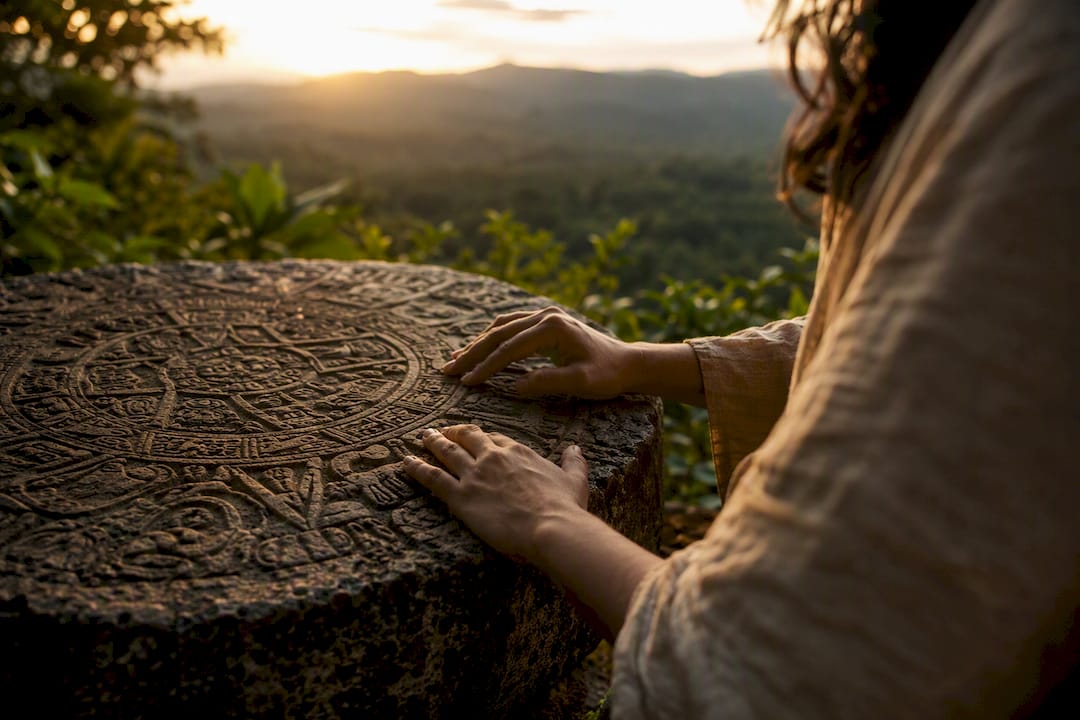
Get Your Own Mayan Birth Cross Reading
Reading about the Cross in the abstract only gets you so far. The real value shows up once you see your own center sign and the four positions that surround it. Mymayansign replaces hours of manual Tzolk’in conversion with an instant, accurate calculation, then goes further with a full interpretation of what your center sign and complementary positions mean for how you move through different life stages.
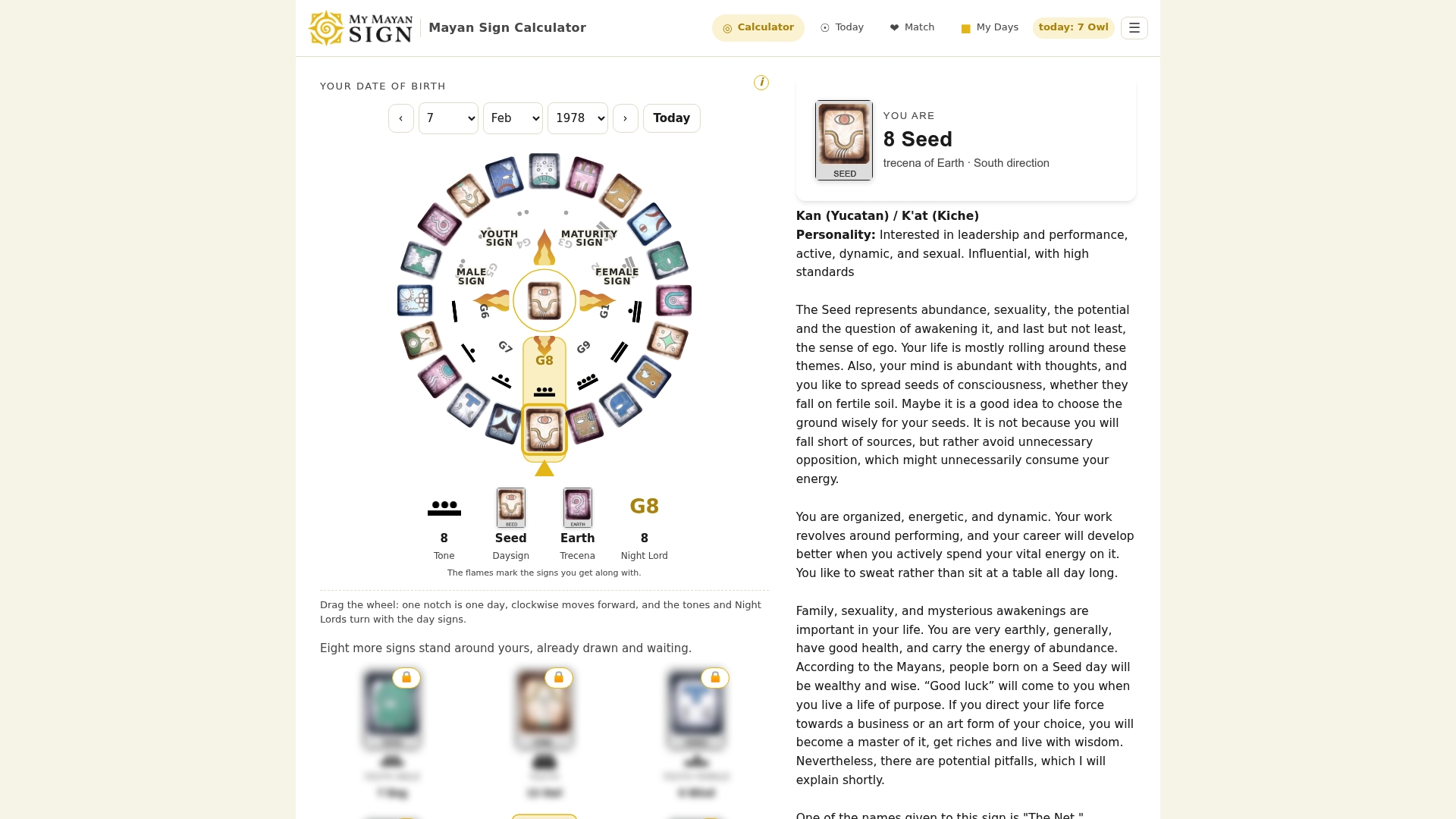
Start with the free Mayan Sign Calculator to find your center position in under a minute. From there, the Mayan Astrology Explained guide walks you through what your full birth cross reveals, and a personalized report expands each position into a detailed reading you can actually apply to your life. Enter your birthdate and see your center sign appear now.
Frequently Asked Questions
What does the Mayan cross symbolize?
It symbolizes the axis connecting sky, earth, and underworld, plus the four cardinal directions radiating from a central point. Together those elements form a map of the cosmos and, in personal readings, a map of an individual’s character and life stages.
What is a Mayan birth cross?
A birth cross is a five-position natal chart derived from your Tzolk’in day sign. The center marks your core identity, while the top, bottom, and two side positions represent complementary energies tied to youth, later life, and balance.
Is the Mayan cross the same as a Christian cross?
No. The visual shape overlaps in some colonial-era art, but the Mayan Cross predates Christian contact and represents an entirely separate cosmological system rooted in the World Tree and the Tzolk’in calendar.
How is a Mayan birth cross calculated from a birthdate?
Your Gregorian birthdate is converted into a Tzolk’in day, which pairs a number (1 to 13) with a day sign (one of 20). That combination sets your center position, and established calendar relationships generate the remaining four.
Why do some Maya communities dress and feed crosses?
Ethnographic research shows many communities treat crosses as living beings rather than static objects. Dressing them in pine or flowers and making offerings during Holy Week connects the ritual to planting season and renewal.
Sources
- The Maya Cross at Palenque: A Reappraisal (Callaway)
- Maya crosses dressed, fed, alive: a case study on Maya animism (Karolinum / ethnography)
- The Sun Above, the Sun Below | Living Maya Time (National Museum of the American Indian)
Recommended
- Mayan Astrology Blog | Day Signs, Tzolkin & Calendar
- Daily Mayan Wisdom – MyMayanSign
- Your Mayan Birthday Calendar: Find Your Maya Day Sign