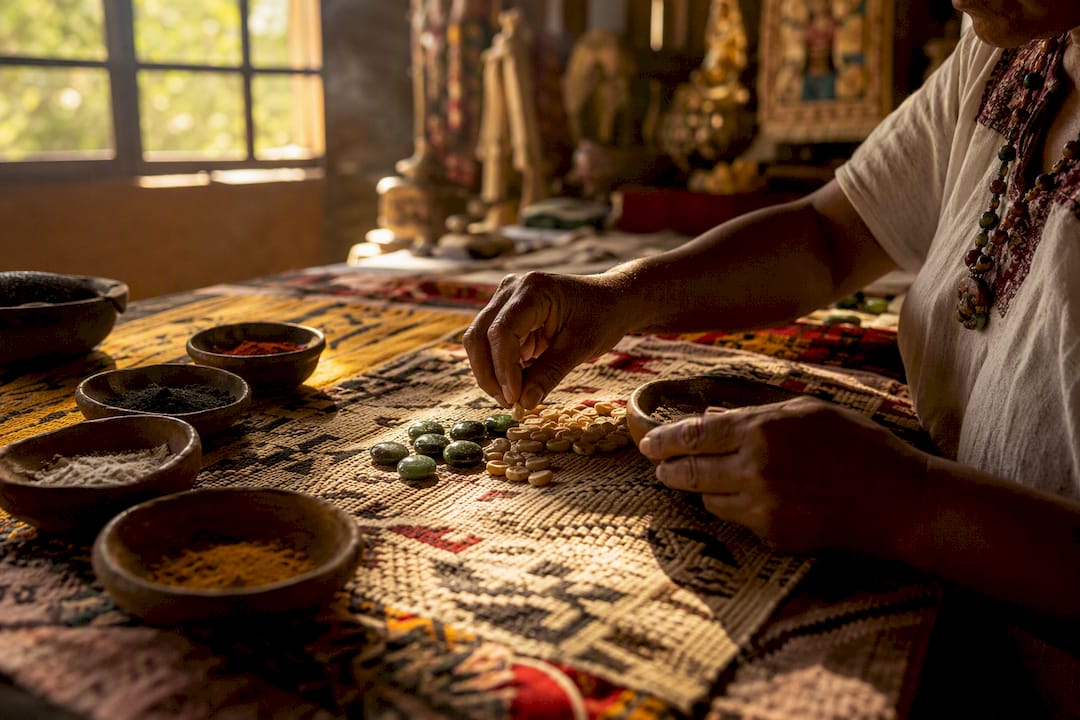
East is red. North is white. West is black. South is yellow. And at the still point where all four meet, the Maya placed a fifth color, blue-green, marking the center of the world. This is the canonical mapping you’ll find across Trinity University’s research on Maya directional symbolism, and it typically runs counterclockwise, starting at the east where the sun rises.
Here’s the framework, plain and simple:
- East = Red (Chak), the direction of sunrise and beginnings
- North = White (Sak), associated with the zenith and the realm of ancestors
- West = Black (Ek), tied to sunset and the underworld’s threshold
- South = Yellow (K’an), linked to earth, maize, and the harvest
- Center = Blue-Green (Yax), the axis where jade, life, and balance converge
I want to be honest with you before we go further: no single, fixed version of this system existed across every Maya city, every century, or every scribe’s hand. Scholars who study Classic-period glyphs and colonial-era vocabularies find real regional variation. What follows is the version with the strongest evidence behind it, along with the nuance that makes it trustworthy rather than tidy.
Key Takeaways
The Maya color-direction system pairs East with red, North with white, West with black, South with yellow, and the Center with blue-green, a mapping confirmed through glyph decipherment and colonial vocabularies but subject to real regional variation.
| Point | Details |
|---|---|
| Canonical mapping | East is red, North is white, West is black, South is yellow, and the Center is blue-green, arranged counterclockwise from the east. |
| Evidence comes from two sources | Colonial-era vocabularies and Classic-period glyph decipherment both independently support the color-direction pairings. |
| East-west is the dominant axis | Solar movement made sunrise (red) and sunset (black) the primary symbolic pairing, with north-south as secondary. |
| Calendar connects directly to color | Only four Tzolk’in day-names serve as year-bearers, and each carries the color and direction of its five-day group. |
| Pigments grounded the symbolism | Cochineal, ochre, charcoal, limestone, and jade or Maya blue physically produced the five sacred colors. |
| Variation is real, not a flaw | Regional practice, time period, and translation choices mean no single fixed version applies everywhere in the Maya world. |
Table of Contents
- What Each Mayan Color Direction Actually Means
- The Epigraphic Evidence Behind Mayan Cardinal Directions
- How the Tzolk’in Calendar Ties Directions to Time
- The Real Materials Behind Maya Symbolic Colors
- Why the Color-Direction System Isn’t the Same Everywhere
- Honoring Directional Colors in Modern Maya Practice
- Explore Your Own Connection to Mayan Directional Symbolism
- What the Evidence Actually Supports
- Sources
What Each Mayan Color Direction Actually Means
Knowing the mapping is one thing. Understanding why the Maya assigned these particular colors to these particular directions is where the cosmology starts to breathe. Each pairing carries a layer of meaning that shows up in ceramics, murals, glyphs, and the rhythms of daily and ritual life.
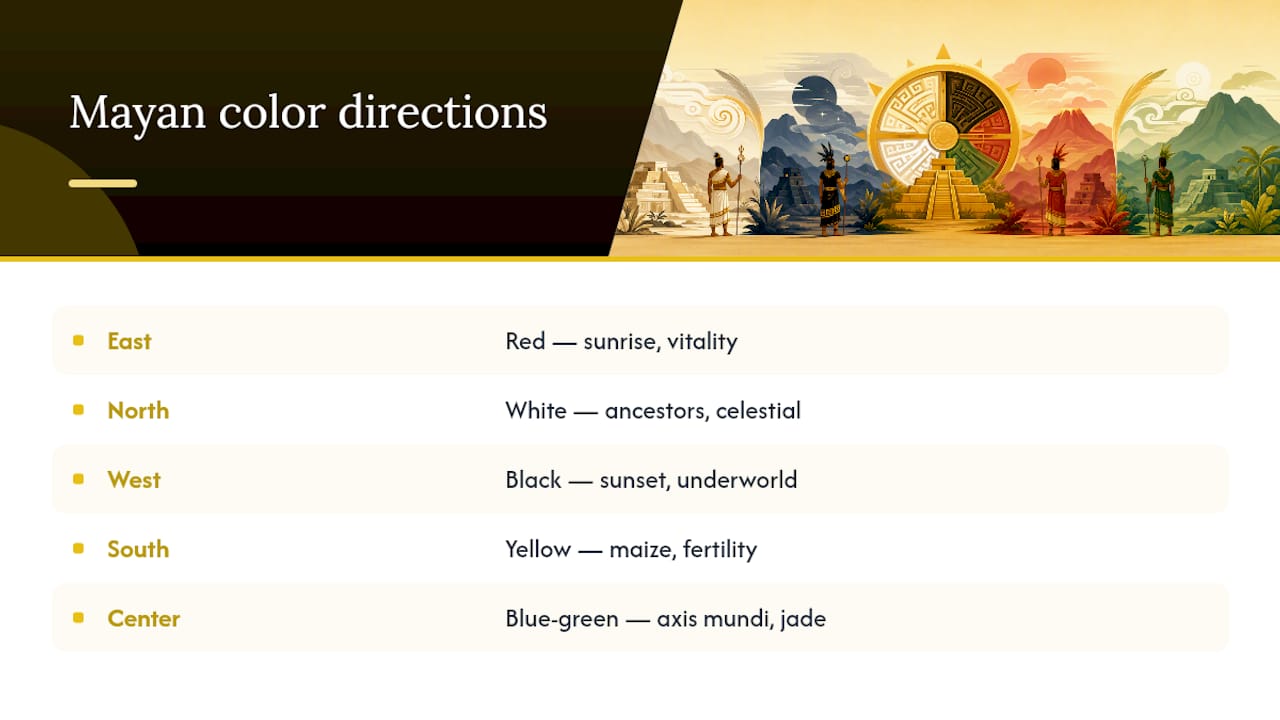
East and red belong together because the sun is born there every morning. Red, or chak in several Mayan languages, doesn’t just mean the color. It carries connotations of vitality, blood, and the raw energy of something new starting. Temples throughout the Maya world were frequently oriented to catch the sunrise, and red pigment shows up disproportionately in eastern-facing architectural elements and burial contexts tied to renewal.
North and white point toward the sky’s highest arc, the zenith, and by extension toward the celestial realm where ancestors were believed to dwell. White, sak, suggests purity and a kind of thin, luminous distance. It’s the direction least tied to the earthly cycle of sun and shadow, which is probably why it became associated with the departed and the sacred rather than the immediate and physical.
West and black mark the sun’s disappearance, and with it, a symbolic descent into the underworld, which the Maya called Xibalba. Black, ek, doesn’t read as purely negative in this framework. It signals transition and depth, the kind of transformation that has to happen before anything can be reborn in the east again the next day. Death and renewal were never separate ideas in Maya thought. They were two halves of the same daily journey.
South and yellow ground the whole system in sustenance. Yellow, k’an, connects directly to maize, the crop that Maya civilization was built on. South carries associations with the earth’s fertility, the harvest, and the steady, nourishing work of growing food. It’s a quieter direction symbolically, less dramatic than sunrise or underworld descent, but no less essential.
Center and blue-green complete the picture as the axis mundi, the pivot point holding the four directions in balance. Yax, the color term, describes something between blue and green, the exact shade of new maize leaves and polished jade. The center wasn’t treated as a fifth cardinal direction so much as the vertical axis connecting sky, earth, and underworld. Jade itself, prized above gold in Maya society, physically embodied this color and its meaning of life force.
Pro Tip: If you’re trying to remember the mapping, anchor it to the sun’s path first. East (red) and west (black) are the major axis, tracking sunrise to sunset. North (white) and south (yellow) fill in the secondary axis. The center (blue-green) holds them all together.
This cosmology wasn’t decorative. It structured how temples were built, how days were named, and how rulers understood their place in a universe with a clear directional order.
The Epigraphic Evidence Behind Mayan Cardinal Directions
Where does this mapping actually come from? Not guesswork, and not modern spiritual reinterpretation layered onto vague artifacts. The evidence traces back to two overlapping sources: colonial-era vocabularies compiled by Spanish friars and Maya scribes in the 1500s and 1600s, and the direct decipherment of Classic-period glyphs carved and painted centuries earlier.
Linguistic anthropologist Nicholas Hopkins, whose work remains one of the most cited references on this subject, argued that Maya directional vocabulary centers heavily on solar movement. His research for the Foundation for the Advancement of Mesoamerican Studies breaks down how color terms attach to directional glyphs in ways that are recoverable from both language and iconography.
The east-west axis, tracking the sun’s daily path, functioned as the dominant organizing line in Classic Maya spatial thought, with north-south operating as a secondary partition of the world.
That’s a meaningful distinction. It explains why red and black, tied to sunrise and sunset, tend to carry more symbolic weight in inscriptions and ritual texts than white and yellow do. The sun’s visible journey was the primary metaphor. North and south filled in the rest of the cosmological map, but they didn’t drive the narrative the way east and west did.
Epigraphers reconstruct this evidence through a few key channels:
- Glyph decipherment: specific color glyphs appear paired with directional glyphs in codices and monumental inscriptions, giving direct visual confirmation of the pairing
- Colonial dictionaries: Spanish missionaries recorded Yucatec and other Mayan-language vocabularies that preserved directional and color terms, even as the friars often misunderstood or flattened the deeper cosmological context
- Comparative linguistics: researchers cross-reference terms across Mayan language branches (Yucatecan, Cholan, Tzeltalan) to see which color-direction pairings hold consistently and which shift
That last point matters more than it might seem. When Hopkins and other researchers, including earlier work by David Kelley on Maya hieroglyphic decipherment, cross-check vocabulary across multiple independent sources and it lines up, confidence in the mapping goes up substantially. When it doesn’t line up, that’s where scholarly caution comes in.
And there is real caution warranted. Interpretive uncertainty runs through this field for a few honest reasons. Glyphs can be eroded, partially destroyed, or stylistically ambiguous. Colonial recorders sometimes imposed their own European four-direction assumptions onto Maya concepts that may have been more fluid. And regional dialects meant the same color term could carry slightly different connotations in Yucatan versus the Petén lowlands versus the highlands of Guatemala.
None of that undermines the core mapping. It just means the confident, citable version of Maya color-direction symbolism is East red, North white, West black, South yellow, and Center blue-green, held with appropriate humility about the edges.
How the Tzolk’in Calendar Ties Directions to Time
The color-direction system wasn’t just spatial. It was woven directly into how the Maya tracked time, through the 260-day sacred calendar known as the Tzolk’in.
The Tzolk’in combines 20 named days with 13 numbers, cycling through every possible combination before repeating. Those 20 day-names aren’t randomly ordered. Scholars, including the researchers behind Mexicolore’s teaching resources on Maya directions and colors, have shown they group into sets of five, with each set of five day-names linked to one of the four cardinal directions.
Here’s how that structure typically works:
- The 20 day-names divide into four groups of five, each group associated with a direction and its corresponding color
- Only four of those twenty day-names can function as year-bearers, the days on which a new 365-day solar year (the Haab’) can begin
- Each year-bearer carries the color and directional weight of its group, meaning the character of an entire year was thought to be colored, quite literally, by which direction its year-bearer belonged to
- The four year-bearer days rotate in a fixed sequence, so a “red east year” would eventually give way to a “white north year,” and so on through the cycle
- This rotation created a longer rhythm layered on top of the 260-day cycle, giving Maya timekeepers a way to track not just days, but the directional character of entire years
This is genuinely clever calendrical engineering. Because only four day-names ever serve as year-bearers, those four days took on outsized ritual importance. Priests and rulers would have paid close attention to which year-bearer was approaching, since it signaled which direction and color would preside over the coming year’s harvests, omens, and political fortunes.
The deeper mechanics of the Tzolk’in and its 20 day signs show how intricately this system connects personal identity to cosmic structure. A person born under a particular day-name wasn’t just assigned a sign. They inherited a directional and color association that shaped how Maya astrology and cosmology interpreted their character.
This is also where the color-direction framework moves from abstract cosmology into something functional. It wasn’t philosophy for its own sake. It was a working system that Maya communities used to organize agricultural cycles, ritual calendars, and expectations about the years ahead.
The Real Materials Behind Maya Symbolic Colors
Symbolic colors had to come from somewhere physical, and the materials the Maya used to produce red, white, black, yellow, and blue-green tell their own story about trade, chemistry, and cultural priority.
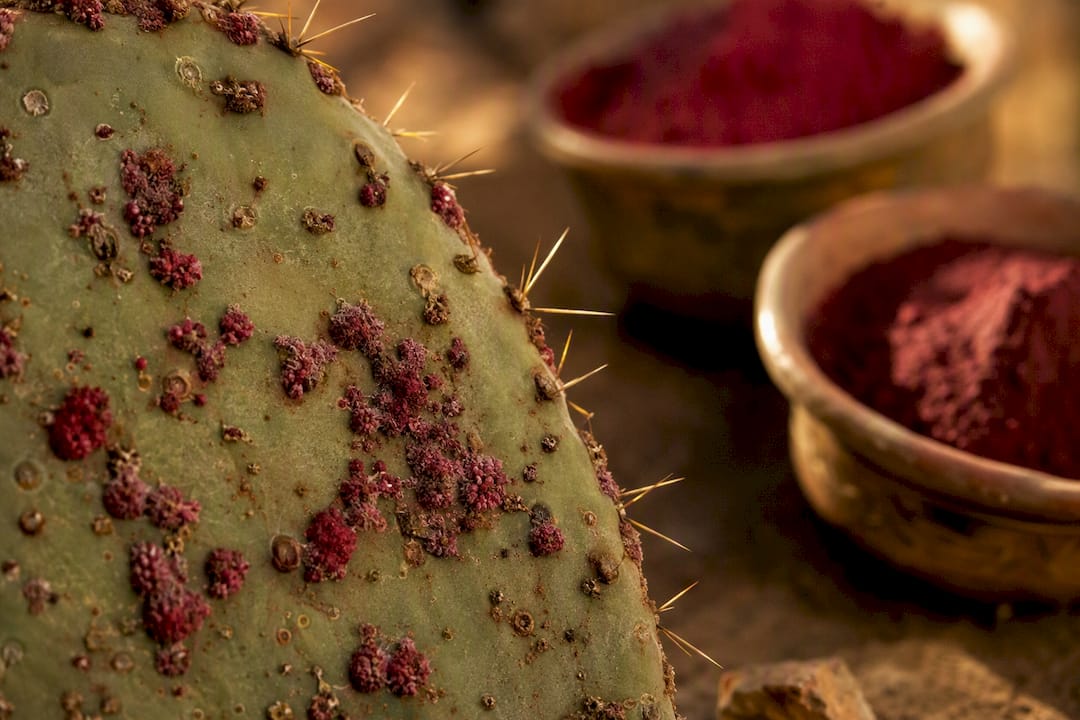
Red came primarily from cochineal, a dye extracted from tiny insects that live on prickly pear cacti, along with hematite and, in more ceremonially significant contexts, cinnabar. Cochineal-derived reds were labor-intensive to produce, which likely reinforced red’s association with something precious: blood, sacrifice, and the sun’s vital energy.
White typically came from limestone or kaolin clay, both abundant across the Yucatan Peninsula. Limestone’s near-universal availability may explain why white grounds show up so consistently across Maya murals and stucco work, serving as both a base layer and a symbolic color in its own right.
Black was produced from charcoal and other organic burnt materials. Given black’s association with the underworld and transformation, it makes sense that the pigment itself came from something transformed by fire, matter converted through burning into a new, symbolically loaded substance.
Yellow derived from earth ochres, iron-rich clays that produce warm yellow tones naturally, sometimes supplemented by maize-derived pigments that tied the color directly back to its symbolic association with the harvest.
Blue-green, the color of the center, had the richest material story. Jade itself embodied yax, prized far beyond its aesthetic value as a stone linked to life force and royal power. For painted surfaces, Maya artisans also developed Maya blue, a remarkably stable pigment made by combining indigo dye with a specific clay mineral called palygorskite. That combination is a genuine achievement in ancient material science, producing a pigment so chemically stable that traces of it survive on murals and pottery more than a thousand years later.
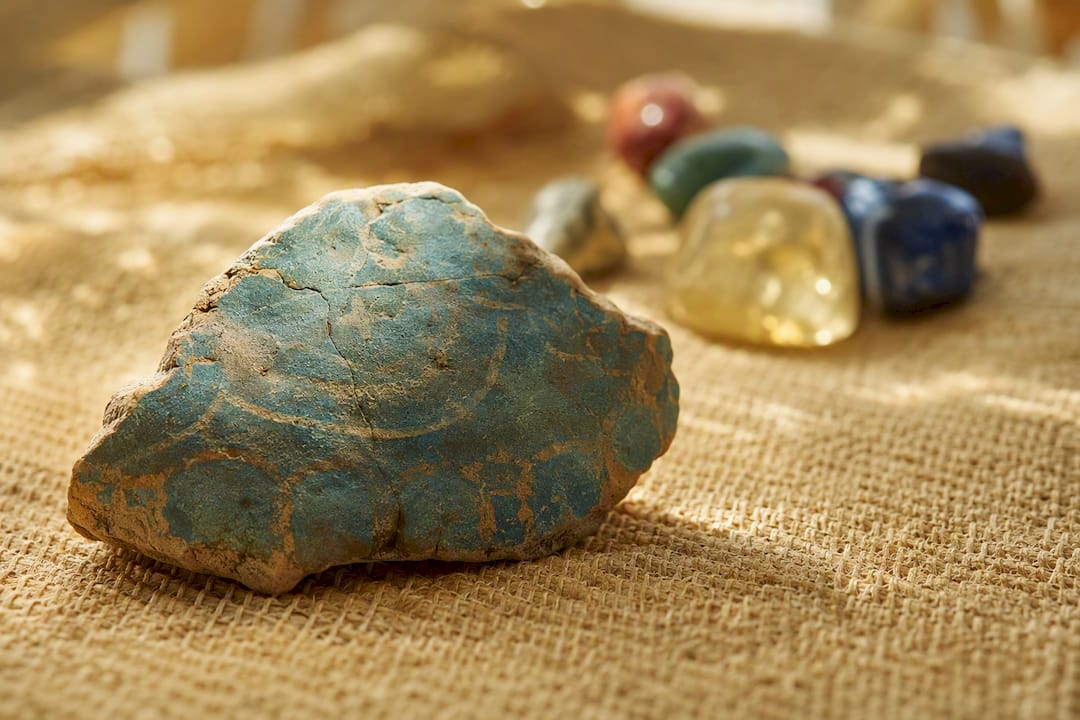
The physical rarity of some of these materials, particularly jade and true cinnabar, reinforced their symbolic weight. Colors tied to expensive, hard-to-source pigments naturally carried more prestige than colors made from common clay.
Why the Color-Direction System Isn’t the Same Everywhere
Here’s where I’ll push back gently on any source, including this one, that presents the Maya color-direction system as a single, unchanging code. It wasn’t. And treating it that way does a disservice to how dynamic Maya cosmology actually was across roughly 3,000 years and a territory spanning modern Mexico, Guatemala, Belize, and parts of Honduras and El Salvador.
Neighboring Mesoamerican cultures offer a useful contrast. In Central Mexico, Aztec cosmology assigned different color associations to its cardinal directions, a pattern explored in Mexicolore’s comparative work on cardinal directions and colors. The Aztec and Maya systems share the broader Mesoamerican habit of linking colors to directions, but the specific pairings diverge, which should immediately signal that this wasn’t a single pan-Mesoamerican code copied everywhere.
Even within the Maya world, variation shows up for a few clear reasons:
- Local practice: individual city-states and language communities developed their own emphases over centuries of independent development
- Time period: symbolism recorded in Late Classic inscriptions doesn’t necessarily match Postclassic or colonial-era practice exactly
- Colonial reporting bias: Spanish friars recording vocabulary sometimes imposed European four-direction frameworks or misheard regional dialect terms
- Translation choices: color terms in Mayan languages don’t map perfectly onto English color categories, so translators make judgment calls that can shift emphasis
Pro Tip: When you encounter a confident claim about “the” Maya color-direction system, ask which region and time period it’s describing. A source that specifies Yucatec versus Cholan versus highland Guatemalan practice is doing more careful work than one that generalizes across the entire Maya world.
The most reliable approach is to weigh primary glyphic evidence first, cross-reference multiple independent colonial vocabularies second, and treat single-source claims with proportionate skepticism. Peer-reviewed epigraphic research, the kind Hopkins and his colleagues produced, carries more weight than popular summaries precisely because it shows its sourcing.
Honoring Directional Colors in Modern Maya Practice
Living Maya communities across Guatemala, Mexico, and Belize still practice ceremonies that draw on directional and color symbolism today, though the specifics vary by community just as they did historically. Ceremonial altars, particularly among K’iche’ and other highland Maya groups, are frequently oriented with attention to the four directions, and community elders continue to hold detailed knowledge that outside researchers often only partially access.
Museums and cultural centers have taken on real responsibility here. Interpretive labels accompanying codex reproductions and mural imagery increasingly note the directional color scheme while being explicit about regional variation, following the same evidence-based caution scholars like Hopkins model in their published research.
If you’re engaging with this symbolism yourself, whether through study, art, or personal reflection, a few practices go a long way toward doing it respectfully:
- Do cite specific sources when you reference the color-direction mapping, rather than presenting it as universal folklore
- Do distinguish between historical Classic-period practice and living contemporary tradition, since they’re related but not identical
- Don’t flatten regional Maya traditions into a single generic “ancient wisdom” narrative
- Don’t treat sacred ceremonial color use as decorative inspiration without acknowledging its living cultural context
The goal isn’t gatekeeping. It’s accuracy, and accuracy is itself a form of respect.
Explore Your Own Connection to Mayan Directional Symbolism
Reading about the color-direction system is one thing. Seeing how it might connect to your own place in the Tzolk’in is another experience entirely. Every day-name in the 260-day calendar carries not just a personality association but a directional and color inheritance, tracing back to the same four-direction, five-color framework covered here.
If you’re curious where your birth date lands in this system, the Mayan Sign Calculator gives you a fast starting point, pulling your day sign, Galactic Tone, and Tree of Life placement from your birth date. For a deeper, ongoing connection to how these calendar rhythms play out day to day, Daily Mayan Wisdom applies the same directional and calendrical logic to daily readings.
For readers who want the fuller cosmological picture, a few resources worth exploring:
- The Mayan Tree of Life explainer unpacks the vertical axis that complements the horizontal four-direction system
- Mayan glyph meanings walks through how directional and color glyphs actually appear in the written record
- The Mayan birthday calendar guide helps you find your own Tzolk’in day sign and its associated direction
None of this replaces the primary scholarship. It’s a bridge from the academic record to something personal you can actually use.
What the Evidence Actually Supports
The strongest claim this research supports isn’t the mapping itself. It’s the discipline behind it. East red, North white, West black, South yellow, Center blue-green holds up because independent lines of evidence, glyphs and colonial dictionaries recorded centuries apart, converge on the same answer. That convergence is rarer than most popular Maya content admits.
Where conventional coverage falls short is the confidence gap. Too many sources present this system as monolithic folklore, stripped of the regional and temporal texture that actually makes it credible. Hopkins’ work on the east-west solar axis deserves more attention than it gets, since it explains why red and black carry more symbolic charge than white and yellow, not just that they do.
If you take one thing forward, prioritize source quality over neatness. A source that admits variation and shows its evidence is more trustworthy than one offering a clean, universal chart. Cosmology this old, spanning this much territory and time, was never going to be tidy. It was going to be true in the way that matters: consistent enough to organize a civilization’s sense of space and time.
— Fatih
Sources
- Maya directions and colors (faculty paper) — Trinity University digital commons
- Directions and Partitions in Maya World View — Nicholas Hopkins / FAMSI
- Maya world directions and sacred colours — Mexicolore resource
- Maya Color Palette: The Exact Pigments they Used — Morrow Archival
Consult the primary papers directly before adapting any of this symbolism into your own creative or ceremonial work.
Recommended
- Daily Mayan Wisdom – MyMayanSign
- Mayan Astrology Blog | Day Signs, Tzolkin & Calendar
- Sacred Teachings of Mayan Astrology – eBook – MyMayanSign
- Mayan Tree of Life: Meaning, Symbolism, and Charts