
Rhythmic Tone, the sixth Galactic Tone in the Mayan Tzolk’in cycle, is the organizing, sustaining energy that turns a fresh idea into a durable practice. If Tone 6 appears in your chart, your gift is organizational intelligence: you build systems that hold weight over time. The challenge is knowing when steady rhythm becomes rigid control instead of genuine service.
TL;DR:
- Rhythmic Tone emphasizes consistent, sustainable organization but risks becoming rigid control if routines are overextended or inflexible.
- Daily micro-habits like weekly reviews and quick space reorganizations help maintain balance without overdoing the system.
- Timing within the 13-day cycle influences its role, shifting from establishing intent to grounding and testing sustainability.
- Traditional Maya practice views the sixth tone as a structure that predates modern names like “Rhythmic” and focuses on active, ongoing calibration.
- Personalized readings using your birthdate clarify how Rhythmic energy manifests uniquely in your chart and daily life.
Table of Contents
- What Rhythmic Tone Means: The Gifts and the Central Question
- Daily Practices for Rhythmic Tone: A 7-Day Habit Plan
- Where Tone 6 Sits in the 13-Tone Cycle
- Dreamspell Names vs. Traditional Maya Daycount
- How Mymayansign Helps You Find and Understand Your Tone
- Where Rhythm Shows Up in Real Practice
- Get Your Personalized Rhythmic Tone Reading
- Sources
What Rhythmic Tone Means: The Gifts and the Central Question
Tone 6 shows up as the person who turns chaos into a schedule. You see it in the coworker who builds the spreadsheet nobody asked for but everyone needs, or the parent who quietly designs the household routine that keeps five different lives moving in sync. This isn’t about control for its own sake. Blogs on Mayan tone symbolism describe Tone 6 as centered on organizing equality, sustaining and distributing what has already been built rather than chasing something new.
That distribution instinct is the gift. People carrying Rhythmic energy often notice imbalance before anyone names it: who’s doing too much, what resource is running thin, which relationship has drifted lopsided. You organize not to dominate a situation but to make it fair and repeatable.
The shadow side is fixation. Tone 6 can grip balance so tightly that it mistakes stillness for safety, resisting the risk a system sometimes needs to grow. A business that never updates its process, a friendship that never tolerates change, a body that won’t rest because rest feels like losing ground. All of that is Rhythmic energy overcorrecting.
Traits that often surface with Tone 6:
- A near-automatic instinct to create checklists, calendars, or routines
- Discomfort when responsibilities feel unevenly split among a group
- A pull toward moderation, sometimes at the cost of bold action
- A tendency to keep systems running long after they’ve stopped serving anyone
The core question Tone 6 asks, again and again, is simple: How do I organize my service so it stays equitable and sustainable?
Pro Tip: If you keep tweaking a system that already works, pause and ask whether you’re refining it or avoiding the next real step.
Daily Practices for Rhythmic Tone: A 7-Day Habit Plan
Rhythmic energy responds better to small, repeatable rituals than to one dramatic overhaul. That fits its own nature: sustaining energy that expresses itself best through short, consistent motions rather than sweeping reorganizations, as Mayan tone guides note.
Try this seven-day frame to test how Tone 6 shows up in your own routine:
- Morning (Days 1 to 7): Ask one question before checking your phone: “What’s the single thing that keeps everything else running today?” Do that first.
- Evening (Days 1 to 7): Name one resource, energy, time, or money, that felt unevenly spent. Adjust tomorrow’s plan by five minutes, not five hours.
- Midweek ritual (Day 4): Spend fifteen minutes organizing one physical or digital space that’s been quietly draining your attention.
- Weekend check (Day 7): Review what you built during the week. Keep what earned its place. Cut what became habit for habit’s sake.
Micro-habits work better than grand plans here: a single recurring reminder, a five-minute reset, a weekly quiet review, rather than a full life audit.
When it comes to balancing maintenance against growth, use a simple rule: if a system has produced zero new results in several months, the Rhythmic impulse has likely gone from sustaining to stagnating. The corrective isn’t more organizing. It’s a short, deliberate “growth sprint,” a week or two where you intentionally break the routine to see what the system can actually handle.
Three red flags suggest rigidity has taken over: you feel anxious when a plan changes without warning, you keep a routine that no longer serves its original purpose, and you measure a day’s worth by how well it followed the schedule rather than what it accomplished.
Pro Tip: Set a recurring date, monthly is enough, to ask “does this system still deserve my maintenance?” Rhythmic energy rarely asks that question on its own.
Where Tone 6 Sits in the 13-Tone Cycle
Every trecena, the 13-day cycle that structures the Tzolk’in, moves through a clear arc. Tones 1 through 4 build intention, form, and definition. Tone 5 delivers a burst of momentum and clarity, the peak of raw creative force. Tone 6 arrives right after, and its job is to come back down to earth. Calendar teachings describe it as the organic rhythm that readjusts after that illumination, organizing the practice and testing whether it can actually last.
That timing matters for interpretation. Tone 6 paired with a day sign tied to communication might organize how you speak and listen. Paired with a sign associated with instinct or movement, it might organize physical pacing instead, how you spend energy across a week rather than a single burst. The tone sets the how; the day sign sets the what.
A few things worth remembering about that pairing:
- Tone 6 amplifies whatever structure the day sign already leans toward
- The same tone can feel steadying on one sign and constraining on another
- Trecena position matters as much as the sign itself when reading meaning
Context changes everything, which is exactly why a generic tone summary only gets you partway there.
Dreamspell Names vs. Traditional Maya Daycount

“Rhythmic” is not an ancient Maya word. It comes from the Dreamspell system, a modern calendar reinterpretation created by José Argüelles in the 1980s, which assigned English names to each of the 13 galactic tones to make them accessible to a wider audience. In traditional Maya practice, the tone is simply the numeral: six, or waqib’ in several Mayan languages, one coefficient among thirteen that combine with the twenty day signs.
Traditional daykeepers, the ritual specialists who maintain the count in many highland Guatemalan communities, generally read the trecena as a living unit rather than translating each numeral into a fixed English concept. Scholarly overviews of the Maya calendar system note that this active, structuring role for the sixth day of a trecena predates any Dreamspell label attached to it.
Assigning English names like “Rhythmic” to the coefficients is a modern interpretive layer. Treat the name as a useful metaphor for reflection, not as literal ancient terminology.
Study both frameworks if the culture interests you, and hold the modern language loosely.
How Mymayansign Helps You Find and Understand Your Tone
A single tone summary tells you the archetype. It doesn’t tell you how Tone 6 behaves when it lands on your specific day sign, in your specific trecena, on the year you were born. That context is what turns a general description into something you can actually use.
Mymayansign’s Mayan Sign Calculator takes your birthdate and returns your Galactic Tone directly, so you can confirm in seconds whether Rhythmic energy is part of your chart. From there, the site’s Galactic Tone Day page tracks which tone is active on any given date, useful if you want to notice how Rhythmic days feel when they cycle back around. For the fuller picture, the Mayan astrology explainer walks through how sign, tone, and Tree of Life fit together, and the tone-focused blog series breaks down all 13 tones with specific daily prompts.

Where Rhythm Shows Up in Real Practice
As an illustrative pattern, Tone 6 can be explored through the tension between consistency and rigidity. A routine may support a person while conditions are stable, then need adjustment when life becomes uneven. This is a general reflection, not a report about a client or a claim attributed to Fatih.
The fix isn’t a better app. It’s permission to let a system flex without collapsing, reflecting how astrology is a self-discovery tool for personal growth. If that tension sounds familiar, a personal reading can show you exactly where in your chart that rhythm lives.
— Fatih
Get Your Personalized Rhythmic Tone Reading
Reading about Tone 6 in general terms only goes so far. Your actual chart pairs that tone with a specific day sign and a specific trecena position, and that combination changes what “organizing your service” looks like in your real life. Start with the free Mayan Sign Calculator to confirm your tone in under a minute, no guesswork required.
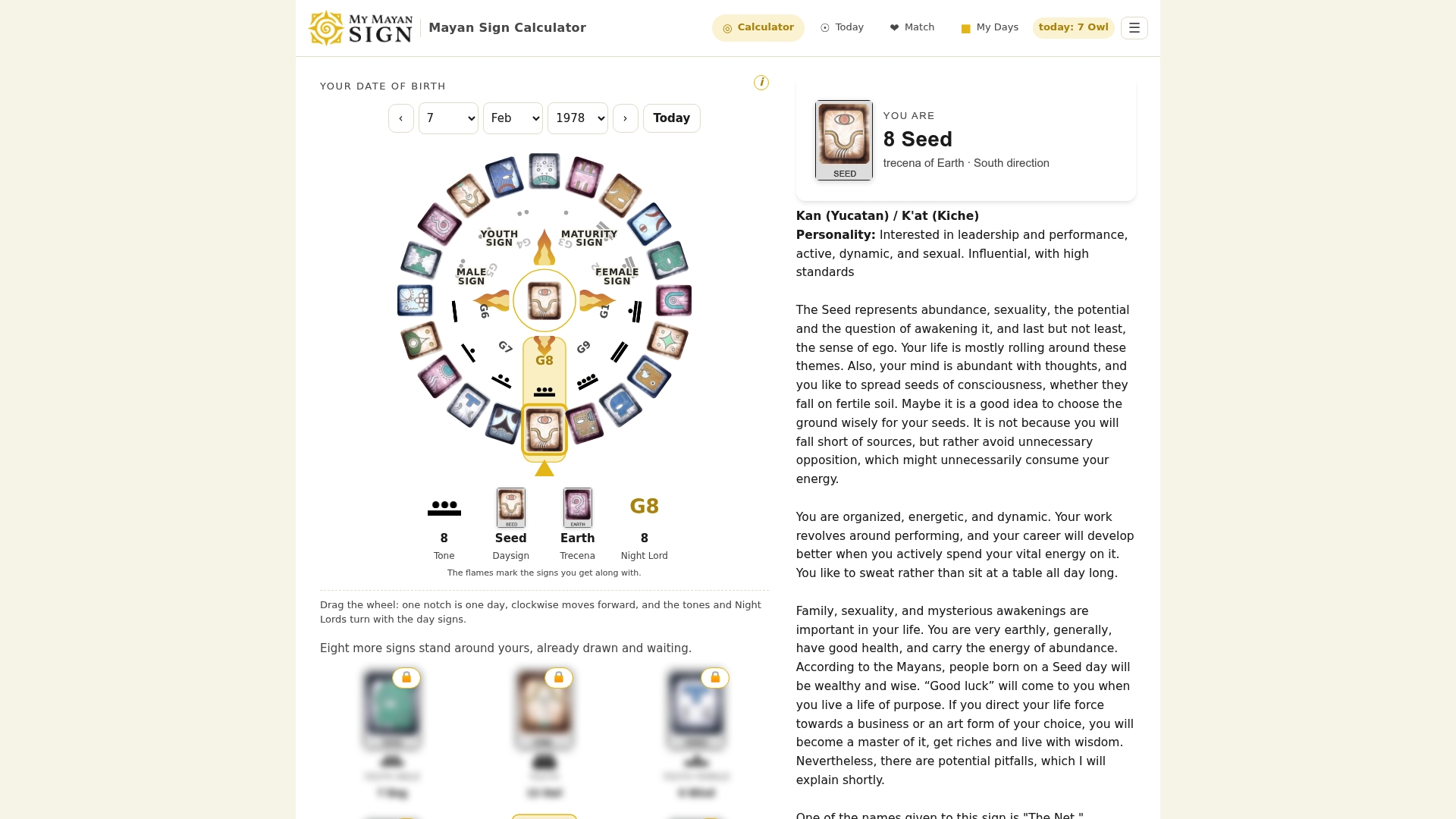
From there, a detailed personalized report goes further than any general overview: it places your tone inside your birth trecena, connects it to your Tree of Life, and gives you prompts written for your specific pairing rather than the archetype alone. Explore what a full Mayan astrology reading covers, or check today’s active tone on the Mayan Calendar Today page before you dive in. Your birthdate is the only information needed, and what you get back is a map for reflection, not a rigid verdict on who you are.
Sources
- Mayan Galactic Tones 1-13: What Your Tone Means | Whisper
- The 13 Galactic Tones of the Mayan Calendar | Shinkofa
- Maya calendar system | Maya Archaeologist
Recommended
- Resonant Tone 7 Meaning: Dreamspell Origin, 8 Practical Prompts
- Find Your Daily Focus: 13 Galactic Tones Meaning, Code Words & Prompts
- 13-Day Trecena: Colonial Roots and Your Birth Reading
- Start Respectfully: Mayan Astrology for Beginners with Free Sign Calculator