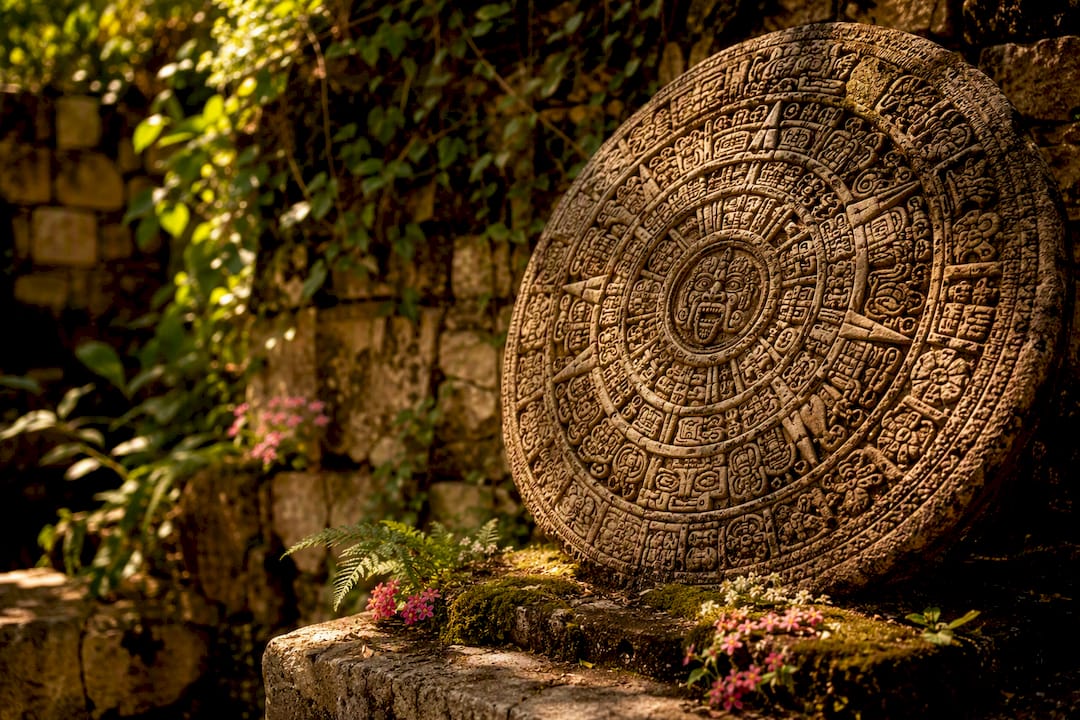
Dreamspell is a modern calendar system created in 1990 by José and Lloydine Argüelles, built from the 260-day Tzolk’in count but reorganized into a New Age spiritual practice with no direct lineage to indigenous Maya daykeeping. It matters historically because it followed the 1987 Harmonic Convergence and later shaped the 2012 phenomenon, influencing how many people outside Mesoamerica came to think about “Mayan time.”
Here is what you need to know before we walk through the full story:
- Philosophy first: Dreamspell was built around the phrase “Time is Art,” a deliberate counter to what Argüelles called the tyranny of the mechanical, money-driven clock.
- Mechanics in one line: a 13-moon, 28-day solar calendar runs alongside a 260-day “galactic spin” made of solar seals and tones, producing a personal Galactic Signature.
- Historical weight: its roots trace to the 1987 Harmonic Convergence and the Planet Art Network, the vehicle that carried Dreamspell into the broader New Age movement and, eventually, the 2012 conversation.
Key Takeaways
Dreamspell is a synthetic 1990 New Age calendar built by José and Lloydine Argüelles that borrows the Tzolk’in’s 260-day length but is not a continuation of indigenous Maya calendrics.
| Point | Details |
|---|---|
| Created in 1990 | José and Lloydine Argüelles built Dreamspell as a board game following the 1987 Harmonic Convergence. |
| Not indigenous Maya | Dreamspell mixes I Ching, Tarot, and magic-square numerology rather than preserving the continuous Tzolk’in count. |
| Peaked around 2012 | Interest and Planet Art Network activity declined sharply after the 2012 phenomenon passed. |
| Verify with primary sources | Cross-check any Dreamspell claim against indigenous Maya daykeeping and peer-reviewed scholarship. |
| Mymayansign offers the authentic count | Mymayansign’s readings use the real Tzolk’in sequence instead of Dreamspell’s repackaged version. |
Table of Contents
- Who Created Dreamspell, and Why It Exists
- How the Dreamspell Calendar Actually Works
- Where Dreamspell Departs From the Maya Calendar
- The Dreamspell Timeline: From Harmonic Convergence to 2012
- How the Movement Spread and Was Practiced
- Criticism and Scholarly Views on Dreamspell
- Dreamspell’s Legacy in New Age Culture Today
- What This History Actually Teaches Us
- Get Your Authentic Mayan Sign Reading
- Primary Sources and Further Reading
- Frequently Asked Questions
- Sources
Who Created Dreamspell, and Why It Exists
José Argüelles, who took the name Valum Votan within his own cosmology, and his wife Lloydine Burris Argüelles, known as Bolon Ik, built Dreamspell together in 1990. José had spent years studying Mesoamerican art and calendrics as an academic before drifting toward a more mystical, prophetic reading of Maya symbolism. Lloydine worked alongside him on the numerology and the day-to-day mechanics of the kit.
Their path there ran through one specific event. The 1987 Harmonic Convergence, a globally synchronized meditation gathering Argüelles organized and publicized, is widely credited as the first mass New Age event covered by mainstream media. That momentum convinced him a new calendar could carry his ideas further than a single gathering ever could.
Quick Fact: Within three years of Harmonic Convergence, Argüelles had launched the Dreamspell board game, founded the Planet Art Network to spread it, and started framing his work as a global movement rather than a personal research project.
A few things followed quickly from there:
- He and Lloydine released Dreamspell: The Journey of Timeship Earth 2013 as a board game and accompanying book.
- The Planet Art Network became the organizing structure for volunteers who wanted to promote the 13-Moon calendar.
- Argüelles had already published The Mayan Factor in 1987, which supplied much of the cosmological framing Dreamspell would later formalize.
How the Dreamspell Calendar Actually Works
Dreamspell runs on two overlapping cycles at once, which is where most newcomers get confused. One cycle handles the “solar” year. The other handles what Argüelles called galactic time.
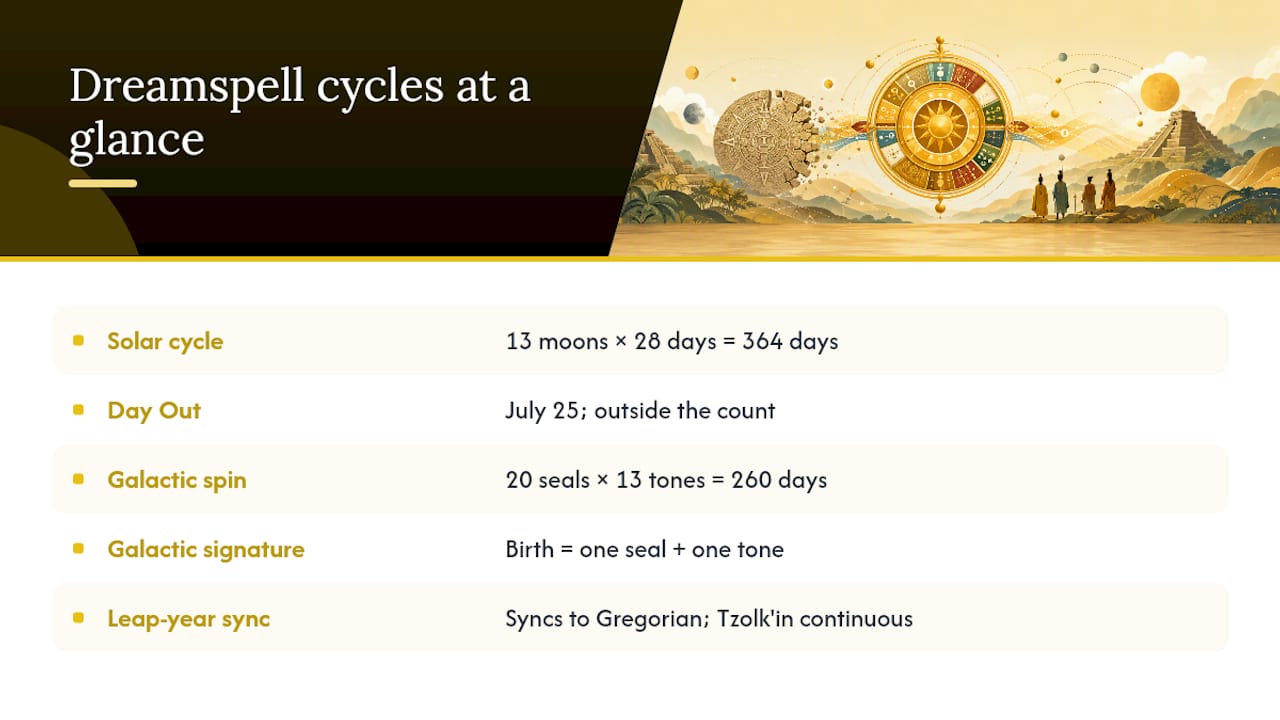
The solar side uses 13 moons of 28 days each, totaling 364 days, with a single extra day, July 25, set outside the count entirely. That day is the Day Out of Time, a kind of cultural reset button with no month or moon assigned to it. The galactic side is the 260-day “galactic spin,” built from 20 solar seals (Dragon, Wind, Night, and so on) crossed with 13 tones (Magnetic, Lunar, Electric, and so forth). Multiply 20 by 13 and you get 260, the same length as the Tzolk’in, though Dreamspell arranges and names its days differently.
Your birthdate maps onto one specific seal and tone pairing, called your Galactic Signature. Someone born on a given day might land on, say, Yellow Sun paired with the Solar tone. Working it out by hand means counting forward from a fixed reference date in Dreamspell’s own numbering, which is where most people simply use a lookup table instead of doing the math themselves.
Pro Tip: If you want to see how a continuous, unbroken 260-day count actually works, without Gregorian leap-year patches, look at how a Tzolk’in birthday is calculated. The contrast makes Dreamspell’s design choices much easier to spot.
One structural detail matters more than it looks. Dreamspell syncs its dates to the Gregorian calendar, including its leap-year rule, which means the Day Out of Time shifts to keep pace with the Gregorian year. The indigenous Tzolk’in count does no such thing. It runs continuously, with no leap days, no resets, and no accommodation for the solar calendar at all.
Where Dreamspell Departs From the Maya Calendar
The comparison is where Dreamspell’s origins get interesting, and where the criticism starts. The Tzolk’in is a genuinely ancient count, still tracked today by Maya daykeepers across Guatemala and southern Mexico, running in an unbroken sequence with no gaps and no synchronization to any solar calendar. Dreamspell borrows the same 260-day length and the same idea of 20 named days crossed with 13 numbers, then rebuilds the sequence and the day names to fit its own numerology.
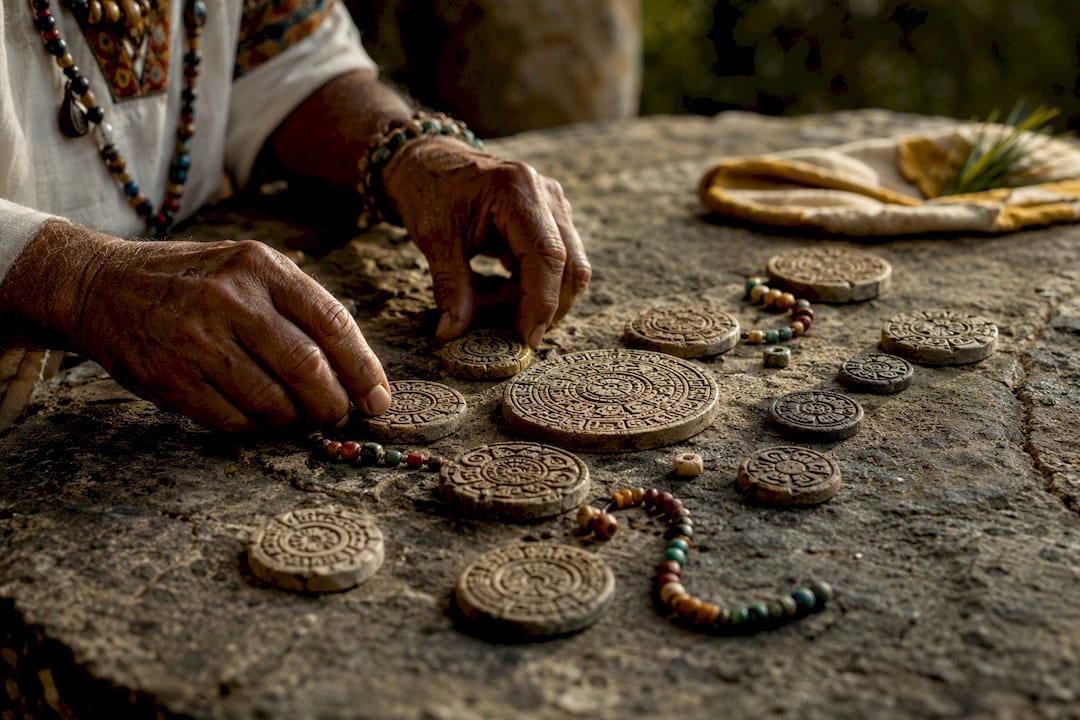
That rebuild pulls from sources with no connection to Mesoamerica at all. Dreamspell’s underlying “radiogenetic” design draws on the I Ching, the 22 cards of the tarot’s Major Arcana, the 28 lunar mansions of older Chinese and Arabic astronomy, and even Benjamin Franklin’s magic squares. Layering those systems onto a 260-day frame is a genuine feat of synthesis. It is not, however, a continuation of Maya tradition, and Argüelles never had that continuity independently verified by Maya institutions.
Pro Tip: If authentic practice is what you’re after rather than a New Age reinterpretation, seek out Maya daykeepers or academic Mesoamericanist scholarship directly. Dreamspell communities rarely claim indigenous endorsement, and that gap is worth taking seriously before adopting its terminology as though it were traditional.
The Dreamspell Timeline: From Harmonic Convergence to 2012
The path from Argüelles’ early academic work to a global spiritual movement covers about three decades. Here is the compact version:
- 1987: Argüelles organizes the Harmonic Convergence and publishes The Mayan Factor, laying the cosmological groundwork.
- 1990: José and Lloydine release Dreamspell: The Journey of Timeship Earth 2013 as a board game and book, introducing the 13-Moon/28-Day calendar and the galactic spin.
- Early 1990s: Telektonon, a companion board game framed as a “talking stone of prophecy,” expands the Dreamspell mythology.
- 1990s: The Planet Art Network forms and starts organizing chapters to promote the calendar worldwide.
- 2004: Thirteen Moons in Motion is published, refining the movement’s teaching materials.
- Leading into 2013: The “Timeship Earth 2013” framing gets folded into the broader 2012 phenomenon that swept through popular culture.
Primary teaching materials from this period are still archived through Law of Time, the site most closely tied to the Argüelleses’ 13-Moon project.
How the Movement Spread and Was Practiced
Planet Art Network chapters carried Dreamspell into local communities through a fairly consistent playbook.
- Local workshops taught newcomers to calculate their Galactic Signature and read Dreamspell’s seal and tone meanings.
- Groups organized Day Out of Time festivals every July 25, treating it as a communal reset for creative and spiritual intentions.
- Some intentional communities and New Age retreat centers adopted the 13-Moon/28-Day calendar as their working calendar instead of the Gregorian one.
Interest peaked as 2012 approached, then dropped off noticeably once that year passed without the transformation many followers expected. Scholarly attention on the Planet Art Network has followed the same arc, with academic interest in Argüelles’ movement fading as the broader 2012 discourse moved on to other frameworks.
Criticism and Scholarly Views on Dreamspell
The core objection scholars and Maya cultural advocates raise is straightforward: Dreamspell is presented using Maya vocabulary and Maya symbolism, yet it is not a Maya system, and it was never developed with the involvement of Maya daykeepers or academic Maya institutions.
- It borrows the length of the Tzolk’in count without preserving its continuous, unbroken sequence.
- It layers in explicitly non-Maya sources: the I Ching, Tarot’s Major Arcana, lunar mansions, and Franklin’s magic squares.
- Critics have questioned whether some structural choices in the system were shaped to fit Argüelles’ personal numerology rather than any external tradition.
- Academic tracking of the Planet Art Network shows a clear decline in both membership and scholarly interest after the mid-2010s.
One critical account puts the core objection plainly:
Dreamspell repackages the 260-day pattern into a new sequence and new day names, drawing on tarot, the I Ching, and Western numerology, and its promotion as an authentic Mayan calendar has drawn direct pushback from researchers who track the real origin of the system.
That critique, laid out at length by Calleman.com, is worth reading in full if you plan to cite Dreamspell as historically Maya in any serious context. Cross-checking any Dreamspell claim against indigenous Maya sources or peer-reviewed Mesoamerican scholarship remains the safest habit for a careful reader.
Dreamspell’s Legacy in New Age Culture Today
Dreamspell’s biggest cultural mark was on the 2012 phenomenon itself. Its Galactic Signature framework, its “Time is Art” language, and its Day Out of Time ritual all fed into a wider ecosystem of alternative calendar movements that flourished through the 2000s and early 2010s.
- It supplied much of the vocabulary later 2012 commentators used, even outside Argüelles’ own circles.
- Planet Art Network chapters helped normalize the idea that ordinary people could calculate a “Mayan” birth sign, decades before that idea became mainstream.
- It stands today as one of the most widely cited examples of a synthetic New Age calendar built to resemble an indigenous system.
Small communities and dedicated websites still maintain the practice, and archived materials remain publicly available through the Planet Art Network’s original publications. Mainstream academic attention, by contrast, has largely moved elsewhere.
What This History Actually Teaches Us
The most overlooked part of the Dreamspell story isn’t the calendar mechanics. It’s the pattern: a genuinely creative synthesis got marketed with borrowed authority it never had. Argüelles was not lying about his intentions. “Time is Art” was a real philosophical project, and the Harmonic Convergence had real cultural impact. But calling the result “Mayan” did something the mechanics themselves don’t support.
That distinction should shape how you approach any calendar system claiming ancient roots. Mymayansign exists precisely because that gap matters. Reading a real Tzolk’in day sign is not the same experience as generating a Dreamspell Galactic Signature, even when both hand you a seal and a number. If you want the version daykeepers in Guatemala and southern Mexico still track today, start with primary indigenous scholarship, not New Age repackaging, however creative that repackaging turned out to be.
Get Your Authentic Mayan Sign Reading
Dreamspell gives you a Galactic Signature built from borrowed tarot and I Ching structures. Mymayansign gives you a reading built from the actual Tzolk’in count Maya daykeepers still use, no invented day names or synthetic numerology involved.
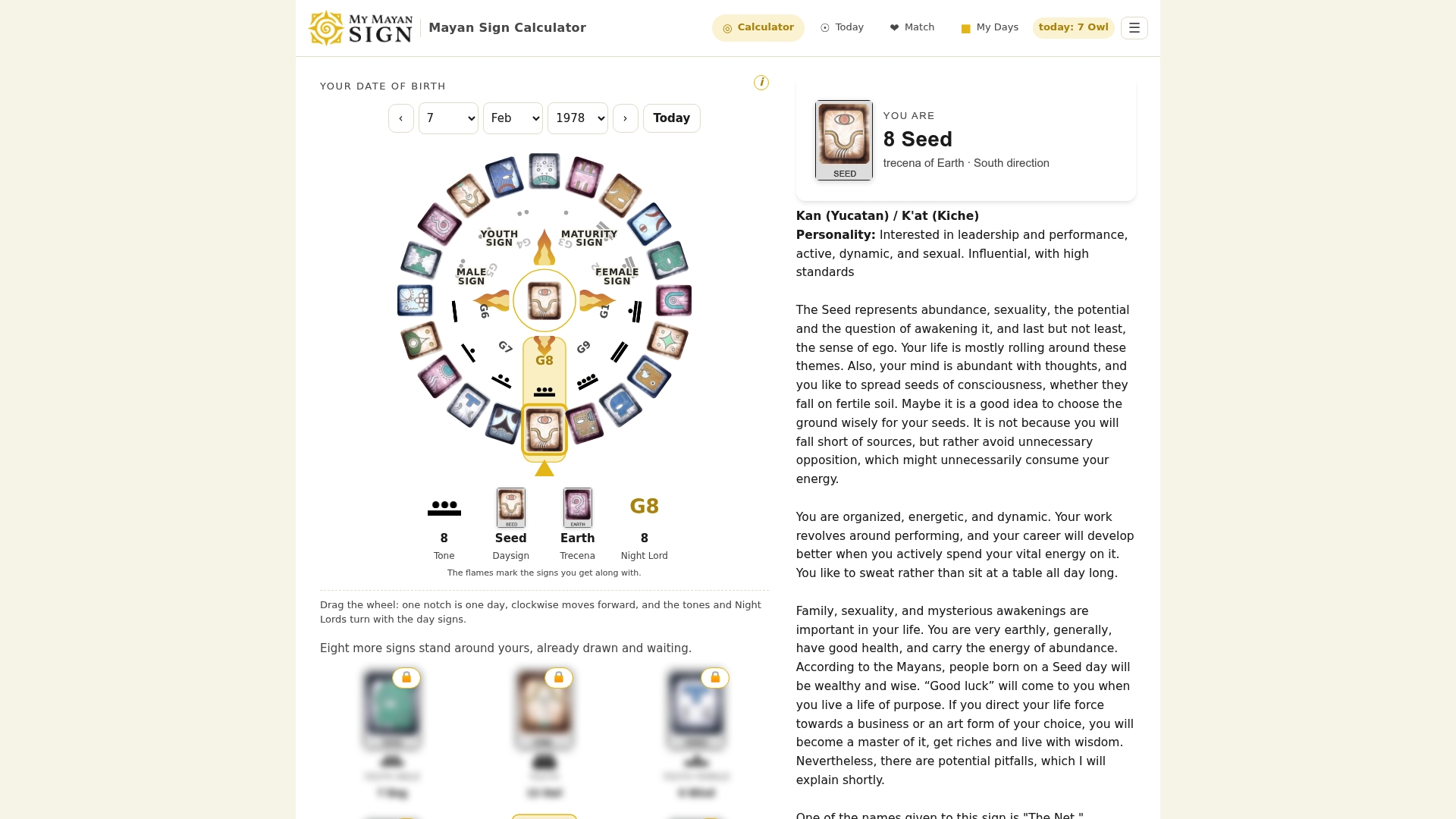
That difference shows up the moment you calculate your sign. Instead of a repackaged sequence, you get your real day sign, tone, and Tree of Life placement based on the continuous 260-day count itself. If you’ve spent this whole article wondering how your own birthdate reads in the actual tradition rather than the New Age version, find your Mayan sign now and see what the unbroken count says about you.
Primary Sources and Further Reading
- Dreamspell — overview of the system’s structure and origins.
- José Argüelles biography, covering Harmonic Convergence and Planet Art Network.
- José Argüelles obituary, The New York Times, contemporaneous journalism.
- Calleman on Dreamspell’s true origins.
- JSTOR search results for peer-reviewed scholarship.
Frequently Asked Questions
Is Dreamspell the same as the Maya calendar?
No. Dreamspell borrows the 260-day length from the Tzolk’in but rearranges the day names and sequence using non-Maya sources, so it is a distinct, modern system rather than a continuation of Maya practice.
Who invented Dreamspell, and when?
José Argüelles and Lloydine Burris Argüelles released Dreamspell in 1990 as a board game, following José’s earlier work organizing the 1987 Harmonic Convergence.
Why is Dreamspell connected to 2012?
Argüelles framed his Dreamspell publications around “Timeship Earth 2013,” and his broader body of work helped popularize the New Age reading of 2012 as a turning point in human consciousness.
Do Maya communities use Dreamspell?
Indigenous Maya daykeepers generally do not use Dreamspell. They maintain the continuous Tzolk’in count, which has no leap-year adjustments and no ties to Argüelles’ numerology.
Where can I calculate my own Mayan day sign instead of a Dreamspell signature?
You can calculate your authentic day sign and tone through the continuous Tzolk’in count using Mymayansign’s calculator, which follows traditional Maya day counting rather than Dreamspell’s reconstructed sequence.
Sources
Recommended
- Day Out of Time Meaning: What It Is and How to Observe
- Your Mayan Birthday Calendar: Find Your Maya Day Sign
- Daily Mayan Wisdom – MyMayanSign
- Mayan Astrology Blog | Day Signs, Tzolkin & Calendar