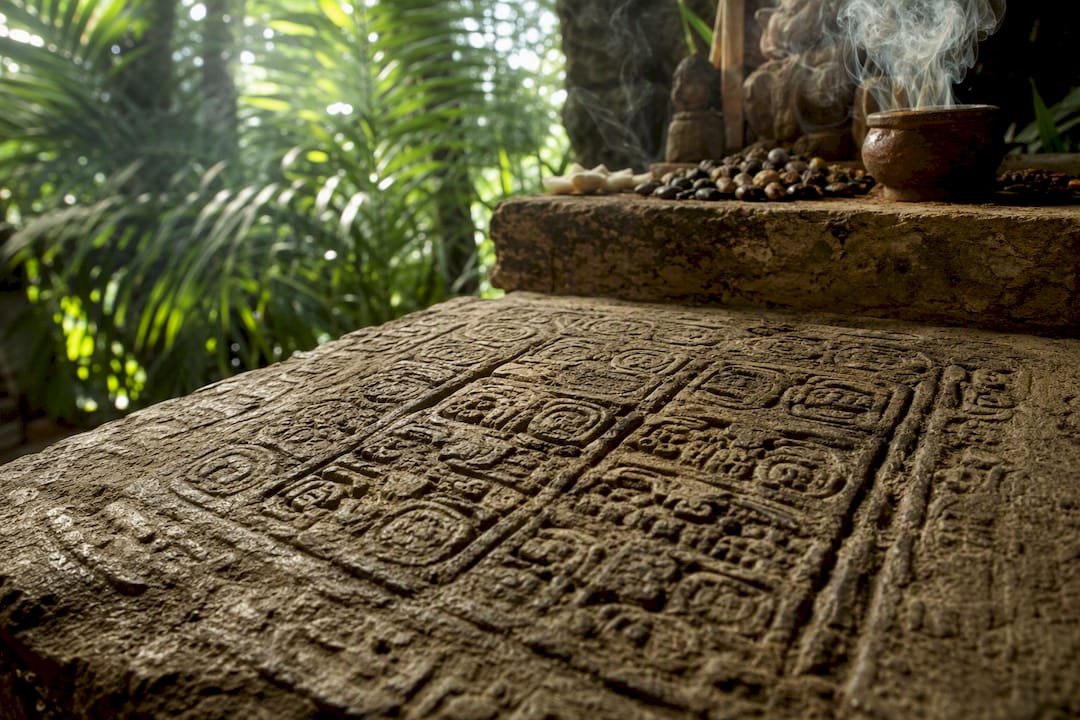
A baktun is a unit of time in the ancient Maya Long Count calendar equal to 144,000 days, or roughly 394.26 tropical years. It equals 20 k’atun cycles stacked together, making it one of the largest practical building blocks the Maya used to track history and cosmology. If you’ve seen the word tied to 2012 headlines and doomsday chatter, set that aside now. The baktun is a calendar unit, not a prophecy.
- Definition: 144,000 days per baktun
- Approximate length: 394.26 tropical years
- Structure: 20 k’atuns, each holding smaller units below it
- Common confusion: often mistaken for an apocalyptic marker rather than a calendrical one
Key Takeaways
A baktun equals 144,000 days (about 394.26 years) and functions as one of the Long Count’s largest practical time units, built from 20 k’atuns and rooted in a near base-20 counting system.
| Point | Details |
|---|---|
| Core definition | A baktun equals 144,000 days, or roughly 394.26 tropical years, built from 20 k’atuns. |
| Base-20 with one exception | The tun uses 18 winals instead of 20, letting the calendar approximate the solar year. |
| Great Cycle length | Thirteen baktuns total 1,872,000 days, the span behind the 2012 milestone. |
| Not a doomsday marker | Museums and specialists confirm period endings meant ceremonial renewal, not apocalypse. |
| Apply it personally | Mymayansign’s free calculator translates Long Count concepts into a personal day sign and tone reading. |
Table of Contents
- What Is a Baktun? Building the Unit From the Ground Up
- How Baktuns Appear in Long Count Dates
- Why the 13th Baktun Sparked So Much Buzz
- The Scholarly Fine Print Behind the Word “Baktun”
- What Baktuns Still Mean for Curious Minds Today
- Find Your Place in the Maya Calendar System
- Sources
What Is a Baktun? Building the Unit From the Ground Up
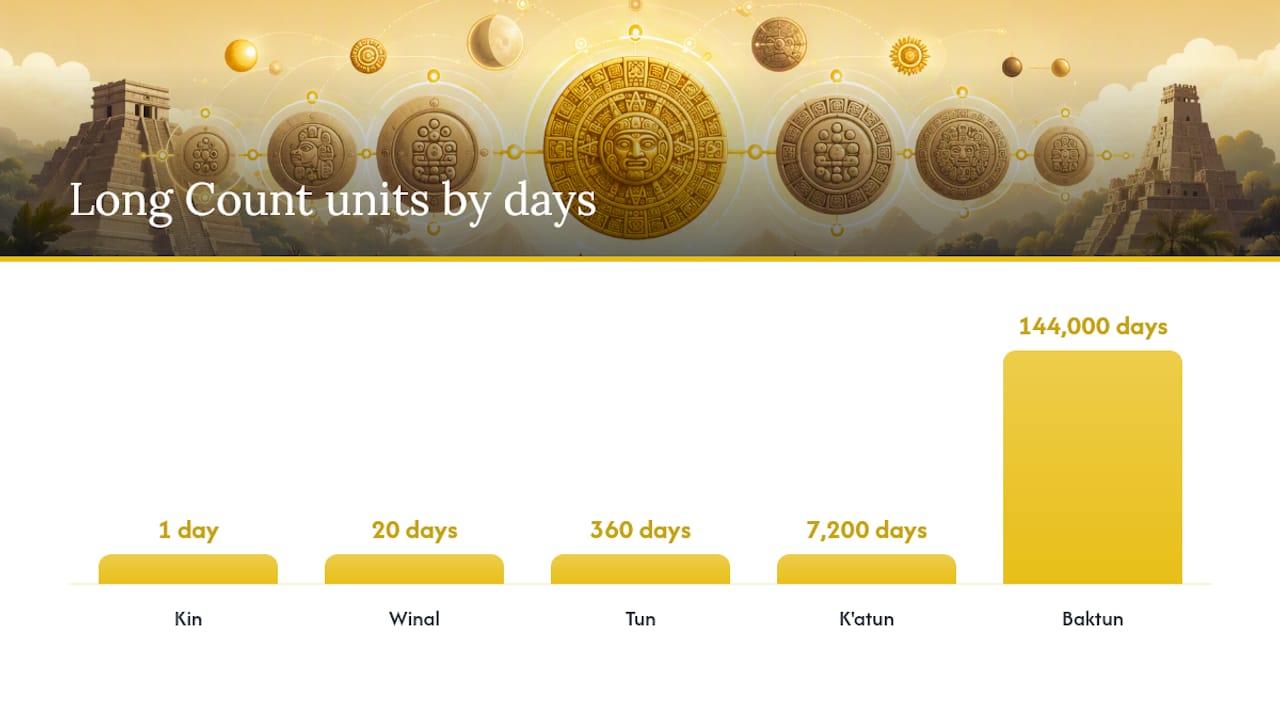
Understanding what a baktun actually is means starting small and working your way up, the same way Maya scribes did. The Long Count is built from five nested units, each one multiplying the last.
- Kin — one day. The smallest unit in the system.
- Winal — 20 kin, or 20 days.
- Tun — 18 winal, or 360 days. This is the odd one out.
- K’atun — 20 tun, or 7,200 days (about 19.7 years).
- Baktun — 20 k’atun, or 144,000 days (about 394.26 years).
Here’s the quirk that trips up a lot of people learning this system: the Long Count runs on base-20 math almost everywhere, except at the tun level, where 18 winals make a tun instead of 20. Mathematicians who’ve studied the system point out that this single deviation is what lets the tun approximate a 360-day count, nudging the whole calendar closer to the actual solar year without abandoning the vigesimal (base-20) logic that shapes everything else.
Quick math check: 20 k’atun × 7,200 days = 144,000 days. Divide that by 365.24 (the length of a tropical year) and you land at roughly 394.26 years, the figure most sources cite for a single baktun.
Once you see the ladder, the whole system stops looking mysterious and starts looking like clever engineering. Each level solves a problem: track days, then bundles of days, then generations, then centuries, then something close to four human lifetimes at once.
How Baktuns Appear in Long Count Dates
Maya scribes recorded dates using five numbers separated by periods, written largest unit first: baktun.k’atun.tun.winal.kin. A monument inscribed with 9.13.10.0.0, for example, tells you 9 baktuns, 13 k’atuns, 10 tuns, 0 winals, and 0 kin have elapsed since the calendar’s starting point.
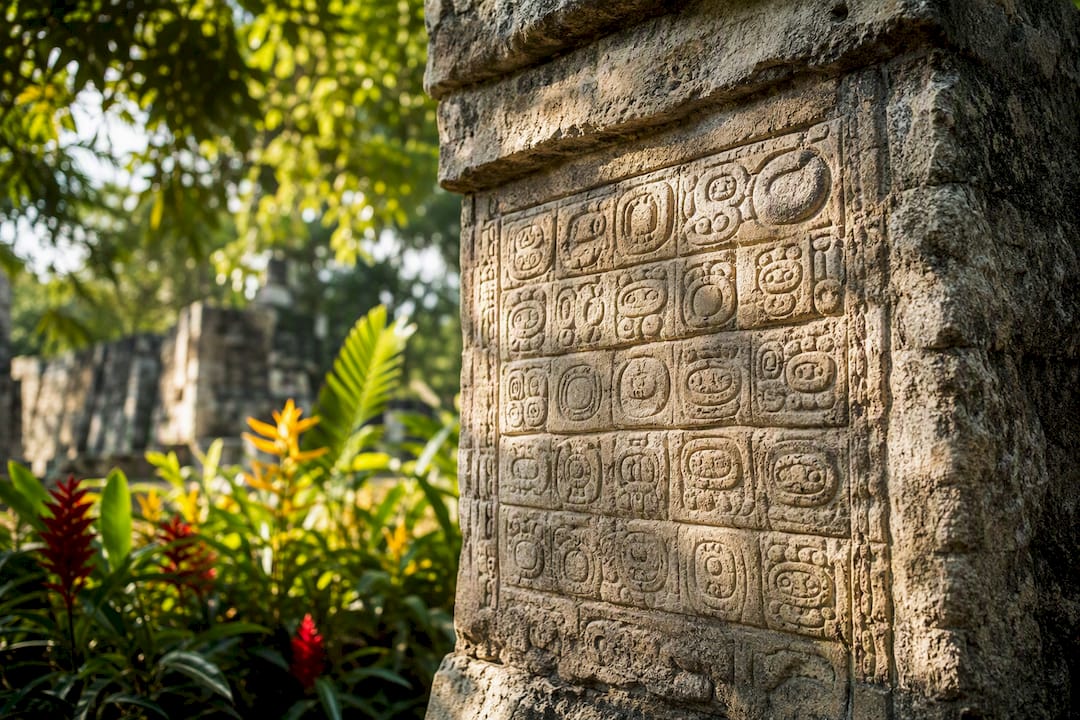
Converting that into a familiar date requires the GMT correlation (named for researchers Goodman, Martinez, and Thompson), which anchors the Long Count’s zero day to August 11, 3114 BCE on the proleptic Gregorian calendar, according to the National Museum of the American Indian. Using that correlation, 9.13.10.0.0 lands in the mid-600s CE, right in the heart of the Classic Maya period when cities like Tikal and Palenque were raising the monuments that carry these dates today.
Now here’s where notation gets confusing. You’ll often see the current era referred to as the “13th baktun,” and that shorthand is technically loose. Because 13.0.0.0.0 marks a completed cycle, epigraphers treat that 13 as functioning like zero for arithmetic purposes, similar to how a century’s final year doesn’t perfectly match its ordinal number.
- The date format always reads left to right: baktun, k’atun, tun, winal, kin.
- A “complete” baktun shows as five zeros following the count (like 13.0.0.0.0).
- Calling it the “13th baktun” is a convention, not a strict count.
Why the 13th Baktun Sparked So Much Buzz
Maya kings didn’t let period endings pass quietly. When a k’atun or baktun closed, cities marked it with public ceremony, carved monuments, and renewal ritual meant to honor the completed span and welcome the one starting after it. These weren’t private observances. They were civic events, often tied to the erection of stelae recording exactly which date had just closed.
The reason 2012 became a global talking point traces back to one specific milestone: the completion of the 13-baktun Great Cycle, a span of 1,872,000 days, or about 5,125 years, measured from the calendar’s starting point. That cycle closed on December 21, 2012, and pop culture ran with it.
Museum researchers and Maya specialists have been consistent on this point: cycle endings represented completion and renewal, not termination. The Maya recorded plenty of dates well beyond 13.0.0.0.0, and modern scholarship treats the 2012 milestone as a moment of cultural and ceremonial significance, not an ending point for time itself.
- Period endings were community events, marked by carved stelae and public ritual.
- The Great Cycle equals 1,872,000 days, roughly 5,125 years.
- The Long Count keeps counting past 13 baktuns; nothing in the mathematics stops there.
The Scholarly Fine Print Behind the Word “Baktun”
Here’s something most casual explainers skip: the word “baktun” itself is a modern convenience, not necessarily what the Classic Maya called it. Epigraphers coined the term, while some evidence points to “pik” as a candidate for the word actually used in antiquity, according to a calendar unit overview compiled from glyphic sources.
Inscriptions also show the Maya thinking in units far larger than the baktun, including the piktun and kalabtun, proof that their conception of time reached well beyond a single 5,125-year cycle. And that “13th baktun” numbering quirk mentioned earlier isn’t a modern mistake. Researchers going back to J. Eric S. Thompson noted the same ambiguity decades ago, and the field has simply kept the convention because replacing it would confuse more people than it clarifies.
Pro Tip: When you see a Long Count date online, check whether the source is citing a strict archaeological reading or a rounded pop-culture version. The two rarely match, and knowing the difference will save you from repeating a common myth.
What Baktuns Still Mean for Curious Minds Today
Long Count units like the baktun anchor the chronology archaeologists use to date monuments, trace dynasties, and reconstruct the rise and fall of Maya cities. That’s not just academic housekeeping. It’s cultural memory preserved in stone math.
The same numerical thinking that built the baktun also shapes how the Tzolk’in, the 260-day sacred count, gets read for personal meaning today. Scholarship and personal astrology draw from the same well: a calendar system built to track both cosmic time and individual identity. If the arithmetic in this article sparked curiosity about where your own birth date falls in that system, Mymayansign’s Mayan astrology resources are a natural next stop.
— Fatih
Find Your Place in the Maya Calendar System
Reading about baktuns and k’atuns is one thing. Seeing where your own birth date falls inside that same calendar system is another experience entirely, and it doesn’t require learning GMT correlation math yourself.
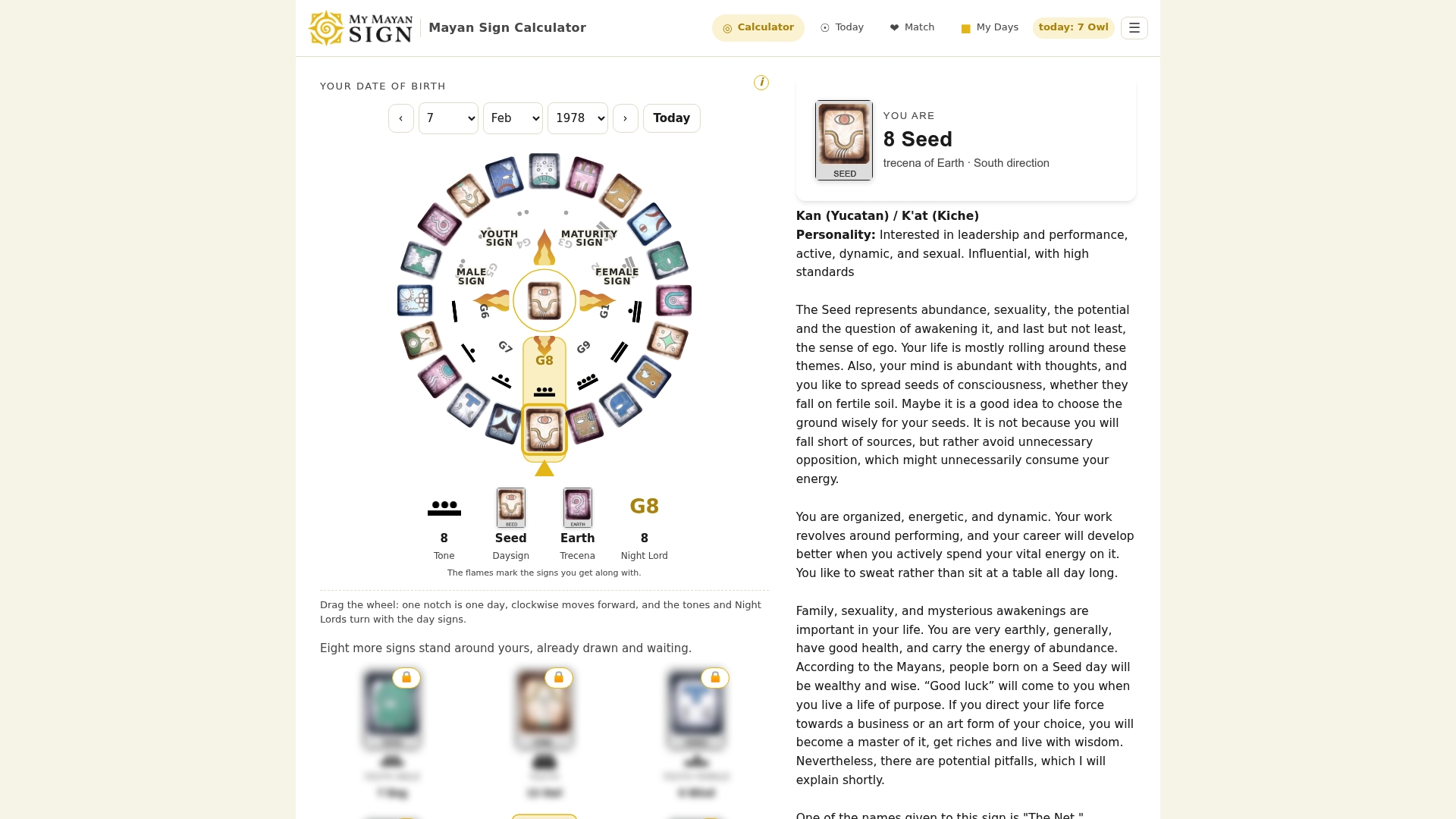
Mymayansign built a free calculator that does the conversion work instantly. Enter your birth date and you’ll get your Tzolk’in day sign, your Galactic Tone, and a plain-language reading of what both mean, no glyph-reading required. For readers who want to go deeper, the site’s Mayan astrology guide walks through how day signs, tones, and the sacred 260-day count connect to personal character and life patterns, and personalized paid reports expand that into a full profile tied to your Tree of Life. Curious what your day sign is? Run your birth date through the calculator and see what comes back.
Sources
Recommended
- Your Mayan Birthday Calendar: Find Your Maya Day Sign
- Mayan Astrology Blog | Day Signs, Tzolkin & Calendar
- Daily Mayan Wisdom – MyMayanSign
- Mayan Calendar Today: Today’s Tzolkin Day Sign, Tone & Meaning