
Something I did not expect when I started teaching Mayan astrology in 2012 is how many people, after they learn what jade meant to the Maya, want to hold a piece of it. Not as an investment. As a reminder.
They read that a jade bead was placed in the mouth of the dead. They see a photograph of Lord Pakal’s mosaic mask. Something lands, and they go looking for a piece of their own.
Then the trouble starts. Type “Mayan jade” into any marketplace and you get a wall of green stones, most of which are not jade at all, and almost none of which have any connection to the Maya. So here is the practical guide I wish those people had. What the stone actually meant, where real Mesoamerican jade comes from, how to tell it apart from the green rocks sold under its name, and how to buy without being fooled.
Why jade mattered so much in the first place
For the Maya, green and blue were not two colors. They were one. The word yax covered both, and it carried a second meaning as well: first, new, fresh. Jade was yax. It was the color of young maize, of standing water, of the world at its beginning.
They also connected it to breath. The jade bead placed in the mouth of the dead was not jewelry. It held the breath spirit, the part of a person that leaves on the last exhale. Rulers were buried wrapped in it. Pakal of Palenque, whose tomb was opened in 1952, wore a funerary mask assembled from hundreds of fitted jade pieces.
The Aztecs called the stone chalchihuitl and ranked it above metal. Spanish chroniclers recorded Moctezuma explaining that a single green stone was worth more than a load of gold, which the Spanish had trouble accepting, since gold was the thing they had come for. If you want that whole story, the meaning rather than the shopping, we have a separate piece on sacred jade and the breath spirit.
One valley, one stone
Here is the fact that does most of the work when you shop.
Jade is not a single mineral. It is two. Nephrite is the softer and more common one, the jade behind most of the Asian trade. Jadeite is rarer, harder, and denser.
Mesoamerican jade is jadeite. And in the entire region there is one known source: the Motagua River valley in Guatemala, along the fault zone below the Sierra de las Minas. Every jade mask, bead, ear flare and polished celt carved by the Olmec, the Maya and the Aztecs traces back to that one corridor of rock.
The source went quiet for centuries after the conquest and was relocated only in the middle of the twentieth century. Guatemalan workshops have been cutting it again since then, including the deep blue-green material usually sold as Olmec blue.
So “Mayan jade” is not just a mood word. It is a geography. If a seller cannot tell you the stone is jadeite, and cannot tell you it came out of Guatemala, then whatever they are selling you, that is not what it is.
What gets sold as jade and is not jade
The most common substitutes, all of them green, all of them cheap, and all of them regularly listed with the word jade in the title:
- Serpentine, soft and waxy, sold as “new jade” or “Korean jade”
- Aventurine and dyed quartz, often with a giveaway glitter of mica flecks
- Dyed quartzite, sold as “Malaysia jade”
- Bowenite, chrysoprase, and plain moulded glass with the carving detail pressed in rather than cut
Then there is a second problem, which catches more people, because the stone genuinely is jadeite. The trade grades jadeite by treatment, not by beauty:
- Grade A. Natural and untreated, waxed at most. What it looks like now is what it is.
- Grade B. Bleached in acid to strip out brown staining, then filled with polymer to rebuild the structure. It looks bright in the photograph. It yellows and dulls over the years.
- Grade C. Dyed.
- Grade B+C. Both of the above.
Only Grade A will still be the same stone in twenty years. That matters more than usual here, because the whole reason to wear this particular stone is that it outlasts you.
How to check before you pay
- Ask one direct question. Is this natural, untreated Grade A jadeite, and where was it mined? A real seller answers immediately and specifically. Vagueness is itself the answer.
- Ask for a lab report on anything above pocket money. Grade A jadeite gets certified as a matter of routine. Nobody certifies dyed quartzite.
- Feel the weight. Jadeite is dense, roughly 3.3 grams per cubic centimetre. It feels heavier than it looks, and it stays cool against the skin much longer than glass or resin.
- Use a loupe. In dyed material the color pools in the cracks and sits along the surface network instead of running evenly through the body. Glass shows bubbles and mould lines.
- Sanity check the price. Fine untreated jadeite is an expensive stone and always has been. A carved pendant priced like a keychain is a keychain.
- Buy where returns exist, so that an honest mistake costs you postage instead of the purchase.
Where to look, honestly
I am not going to hand you a list of five shops. Links rot, ownership changes, and a recommendation I cannot stand behind in two years is worth nothing to you. What holds up is the category:
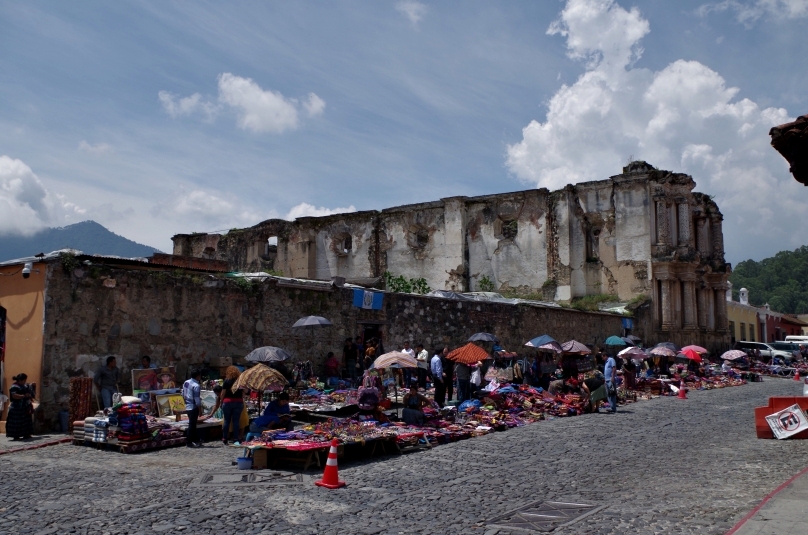
- Workshops in Guatemala, especially around Antigua and the Motagua region, that cut their own stone and can name the quarry. Many of them ship internationally.
- Museum shops attached to institutions with Mesoamerican collections. Their replicas are labelled honestly as replicas, which is exactly what you want.
- Established gem dealers who hand over lab reports without being pushed.
- Artisan marketplaces where the maker is a named person with a workshop, not an anonymous storefront using stock photographs.
The red flags are the same everywhere. The same product photo appearing across dozens of listings. No mineral ever named, only the word jade. No distinction drawn between jadeite and nephrite. Prices that do not change between a serious carving and a trinket.
The one line you should not cross
If a listing offers you an authentic ancient Mayan or Aztec jade artifact, close the tab.
Genuine pre-Columbian objects cannot legally leave Guatemala or Mexico. Anything advertised as one is either a replica being described dishonestly, or it came out of a looted site, which means somebody destroyed a piece of recorded history to put that object around your neck. A replica sold openly as a replica is a good thing to own. Buy that one.
Wearing it with intention
Now the part that matters more than the receipt.
The Maya did not wear jade as an accessory. It was placed, given, worn and buried in relation to a specific person and a specific moment. If you are going to wear the stone, it is worth knowing what you are wearing it for.
The simplest way in is your own day sign. Every birth date in the Tzolkin carries a sign and a tone, and each sign has its own direction, its own color and its own work in a life. You can find yours in two minutes with the free Mayan sign calculator. Once you know it, a jade piece can carry the glyph of your sign, or the sign of whichever position on your Tree of Life you are consciously trying to strengthen.
That turns a green stone into a reminder you agreed to, which is close to what it was for in the first place.
Caring for jade
- Warm water, mild soap, a soft cloth. That is the entire method.
- Keep it away from bleach and from perfume sprayed directly onto the stone.
- Skip ultrasonic cleaners and steamers. Both are risky on treated or fractured material.
- Jade is tough, meaning it resists breaking, but jadeite still chips on a hard edge. Store it apart from harder stones.
- Wear it. Skin does the stone no harm, and a piece sitting in a drawer is not doing its job.
Questions people ask
Is Mayan jade the same as Chinese jade?
No. Different mineral and different source. Most Chinese jade of the classical tradition is nephrite, while Mesoamerican jade is jadeite from Guatemala. Both are real jade. They are simply not the same stone.
Can I identify jadeite at home?
You can rule things out. Weight, coolness on the skin and a loupe will catch most glass and most dyed quartzite. You cannot reliably separate Grade A from a well done Grade B by eye, and neither can most sellers. For that you need a lab report.
Is it appropriate to wear Mayan jade if I am not Maya?
Buying a piece cut by a Guatemalan workshop supports living Maya artisans and a craft that survived the conquest. Buying a looted artifact does the opposite. The honest question is not whether you may wear it, but which of those two things you are actually paying for.
Which color should I choose?
Guatemalan jadeite runs from near white through apple and forest green to the deep blue-green material. There is no ranking that makes one of them more Mayan than another. Choose the piece you will actually wear.
Before you buy anything
Know your sign first. A jade piece chosen around your own day sign means something every time you look down at it, and a piece chosen at random is just a green stone. Start with the free Mayan sign calculator, then go shopping.
Fatih Kecelioglu is the founder of MyMayanSign and has been teaching Mayan astrology since 2012. He is the author of Sacred Teachings of Mayan Astrology.