
At first glance, the Mayan zodiac and Western astrology look like cousins. Both start with your birthday. Both connect the sky above to the life you are living down here. Both have been used for centuries to make sense of who we are and when to act.
But the moment you look closer, you find two systems built on different calendars, different symbols, and, most importantly, two very different questions. Western astrology mostly asks, “What are you like?” The Mayan calendar asks, “What did you come here to do?” One paints your personality. The other hands you a compass. Neither is wrong. They are simply pointing at different things.
Let me walk you through how they actually compare, the way I would explain it to a friend over tea.
Two calendars, two questions
Western astrology runs on the solar year you already know. Twelve signs, one turn of the Sun, roughly a month each. Your sun sign is simply where the Sun was sitting against the stars on the day you were born. The system grew out of Babylonian sky-watching around 2,500 years ago and was later shaped by Greek philosophy into the personality-focused astrology most people read today. It leans on the planets and their positions at your exact moment of birth.
The Mayan zodiac runs on something older and quieter: the Tzolkin, a sacred calendar of 260 days. It is built from 20 day-signs turning together with 13 numbers, called Galactic Tones. Twenty times thirteen gives you 260 unique combinations, and then the whole wheel begins again. There are no planets in it. It is a calendar of energy, not a snapshot of the sky. And it is the authentic count still kept today by living Maya daykeepers in the highlands of Guatemala. It is not a museum piece. It has been running, day after day, for well over two thousand years.
Why 260 days? Here is the part I love. It is close to the length of a human pregnancy. The Maya saw the Tzolkin as the cycle of a human being coming into the world. I like to ground it even further. There are 20 amino acids that build every protein in your body, and 13 main joints that let your body move. Twenty signs, thirteen tones. The calendar is a map of a person, written in the same numbers as your own body.
What each system is really measuring
This is the heart of the difference, so let me slow down here.
Your Western sun sign is a portrait of your temperament. It describes how you tend to feel, react, and move through the world. Add your moon and rising sign and a few planets, and you get a richer picture of your personality. It is genuinely useful. When someone tells you they are a fiery Aries or a careful Capricorn, you usually know something true about them straight away.
The Mayan day-sign is measuring something else. It is less about your personality and more about the energy you came in carrying. Your role. Your medicine. The work your soul signed up for. And it is never just one sign. In the Mayan system you have a whole Tree of Life, usually nine signs, each one describing a different part of your life and your timeline.
So the Mayan calendar is not a fortune-telling device. It is a mirror. It does not tell you what will happen. It shows you the energy you are working with, so you can work with it on purpose. As I often remind people, you are not your sign. The map is not the territory. Your sign is the map. You are still the one walking the road.
Why the symbols feel so different
Look at the symbols and the gap becomes obvious. Western astrology groups its twelve signs under four elements, fire, earth, air, and water, and the meanings lean toward personality: ambitious, nurturing, analytical, adventurous. They are archetypes of character.
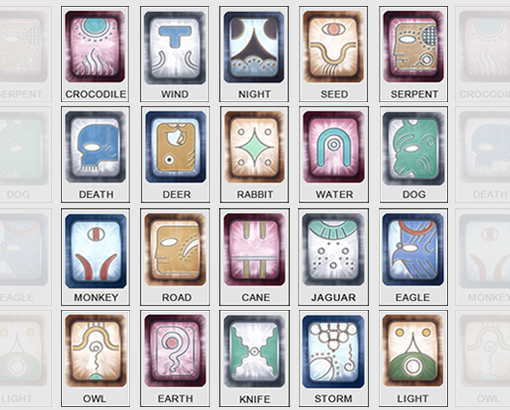
The Mayan day-signs are living forces and animals. Crocodile, the first day, beginnings and raw vitality. Wind, the breath that carries spirit and communication. Serpent, charisma and the awakened body. Jaguar, the shaman who sees in the dark. Eagle, the one who flies high and sees the whole picture. These are not descriptions of what you are like at a dinner party. They point at what you are here to do, the energy you move through the world. That single shift, from “what you are like” to “what you carry,” is the real difference between the two systems.
A real example: Freddie Mercury
Let me make this concrete with someone we all know, because abstract comparisons only get you so far.
Freddie Mercury was born on the 5th of September, 1946. In Western astrology, that makes him a Virgo: precise, perfectionist, devoted to craft. And that is true. Anyone who knows how obsessively he layered vocals and chased the perfect take in the studio has met his inner Virgo. The Western chart names his temperament beautifully.
Now look at the same man through the Mayan calendar. His day-sign is 9 Death. I know the name sounds heavy, so let me reassure you right away. Death is one of the luckiest and most beautiful signs in the whole system. It is the sign of transformation, of dying to one thing and being reborn as another. And the ninth tone makes that energy strong and far-reaching.
If Freddie’s Death sign speaks to you, you can go deeper in the Death sign in Mayan astrology, the sign of transformation and rebirth.
Look at his life through that lens. He transformed rock music. He transformed himself every time he walked on stage, becoming something far larger than the shy man he was offstage. Even his songs carry it. “The Show Must Go On,” which he recorded as he was dying, is transformation set to music. Western astrology told us he was a perfectionist. The Mayan calendar told us why he was here. To transform.
And the rest of his Tree of Life fills in the story, which is exactly how I read any chart. He carried the Road sign, the sign of travel and foreign lands, and his life fit it precisely. He was born in Zanzibar to a Parsi family with roots in India, and he built his life in England. He carried Light, the sign of the one who shines and illuminates, which is hard to argue with for a man who could light up a stadium of a hundred thousand people. He carried the sharp edge of Knife, the clean cut he made from his old life to live the one he truly wanted. And he was guided by Jaguar, the shaman’s sign, which you can hear in the strange spiritual depth of a song like “Innuendo.”
That is the whole point. Western astrology gave us his personality. The Mayan calendar gave us his purpose and the arc of his life. Put them together and you see the man more fully than either one could show you alone.
The birth chart versus the Tree of Life
The structures are different too, and it is worth understanding why.
A Western birth chart is a snapshot. It freezes the sky at the exact minute you were born and reads the planets in their houses. It is a photograph of one moment in time.
The Mayan Tree of Life is shaped like a cross. Three signs run down the center. Your Youth sign sits at the top, which also points to your past and what you came to heal. Your core birth sign sits in the middle, which is who you are now. Your Mature sign sits at the bottom, which points to your future and acts as your guide. Then a right-hand column describes your public life and what you give the world, and a left-hand column describes your private life, your intimacy and your family.
Here is what surprises people most. The Mayan system says you grow into these signs over time, in stages of about thirteen years. In your youth, your Youth sign is loud. Around the age of 26, you are reborn into your core sign. Around 52, you settle into your Mature sign for the rest of your life. Your chart is not a fixed label stamped on you at birth. It is a path you walk, and you become more of yourself as you go.
One honest caution before you calculate
If you go looking online, you will find “Mayan sign calculators” that flatly disagree with each other. There is a reason for that. Many of them are based on the Dreamspell, or 13-Moon, system created by Jose Arguelles in the 1980s. It is a beautiful, well-meaning modern creation, but it was never authorized by the Mayan elders, and it slowly drifts away from the authentic count.
At MyMayanSign I use the genuine K’iche’ count, the same one the living daykeepers still follow each day. I mention this not to start an argument, but because if you are going to take your sign to heart, you deserve to know that it is the real one.
So, can you use both?
Yes, and I think you should. They do not compete. Western astrology gives you the texture of your personality, the daily weather of your temperament. The Mayan calendar gives you the bigger arc, your purpose, your timing, the energy you carry and the stages you move through across a life. One is the portrait. The other is the compass. Read together, they round each other out.
If you are curious where you land in the Mayan system, the easiest place to start is your own day-sign. You can find your Mayan sign with the free calculator in less than a minute, and from there your full Tree of Life and your personal calendar begin to open up. If you would rather get the background first, start with what Mayan astrology actually is, or read more about what your birth sign really means.
Calculate your sign, sit with it for a few days, and notice what it shows you. I think you will find it answers a question your sun sign never quite reached.
Frequently asked questions
What is the main difference between the Mayan zodiac and Western astrology?
Western astrology follows the 12-month solar year and describes your personality through your sun sign and the planets. The Mayan zodiac follows the 260-day Tzolkin calendar of 20 day-signs and 13 tones, and it describes the energy and purpose you came in carrying. One asks what you are like. The other asks what you are here to do.
Why does the Mayan calendar use 260 days instead of 365?
The 260-day Tzolkin is a sacred and personal calendar, not a farming or civil one. It is close to the length of a human pregnancy, so the Maya saw it as the cycle of a human life coming into being. The everyday solar year still existed alongside it in a separate calendar called the Haab.
Can I have both a Western sign and a Mayan sign?
Yes. Everyone has both, because they are simply two different ways of reading the same birthday. Many people use their Western chart for the feel of their personality and their Mayan Tree of Life for purpose and timing. The two complement each other rather than contradict.
Want to see this same chart-reading method walked through for a single sign, from the core sign down to the four supporting signs? Read our deep dive on the Deer in Mayan astrology, the sign of the natural-born guide.
Did you notice the number sitting in front of each Mayan sign? Freddie carries the 9 in 9 Death, and that number is his Galactic Tone, the volume his sign plays at. To understand what your own number means, read the 13 Galactic Tones and what your number means.
Fatih Kecelioglu is the founder of MyMayanSign.com and the author of Sacred Teachings of Mayan Astrology. He has practiced Mayan astrology for over fifteen years.